





Footwear with Waterproof technology: how moisture protection helps maintain comfort in rainy weather
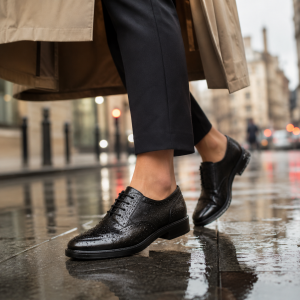
Rain, wet asphalt, puddles, mud, and sudden weather changes can quickly ruin even the most carefully planned outfit. Shoes get wet, feet become cold, moisture builds up inside, and walking feels much less comfortable. That is why Waterproof technology has become important not only for outdoor and sports footwear, but also for everyday city shoes.
Shoes with Waterproof technology are designed to protect the feet from moisture and help maintain comfort in rainy weather. Their purpose is not simply to “avoid getting wet”, but to keep a balance between protection, comfort, and breathability. A good pair should prevent water from entering, while still avoiding the feeling of a closed plastic layer where the foot overheats and sweats.
For an everyday wardrobe, this matters a lot. In the city, we often spend the whole day in the same pair: going to work, entering shops, walking, or using public transport. If shoes get wet in the morning, comfort disappears for the rest of the day. Waterproof protection helps prevent this and makes footwear more practical for unpredictable weather.
What Waterproof means in footwear
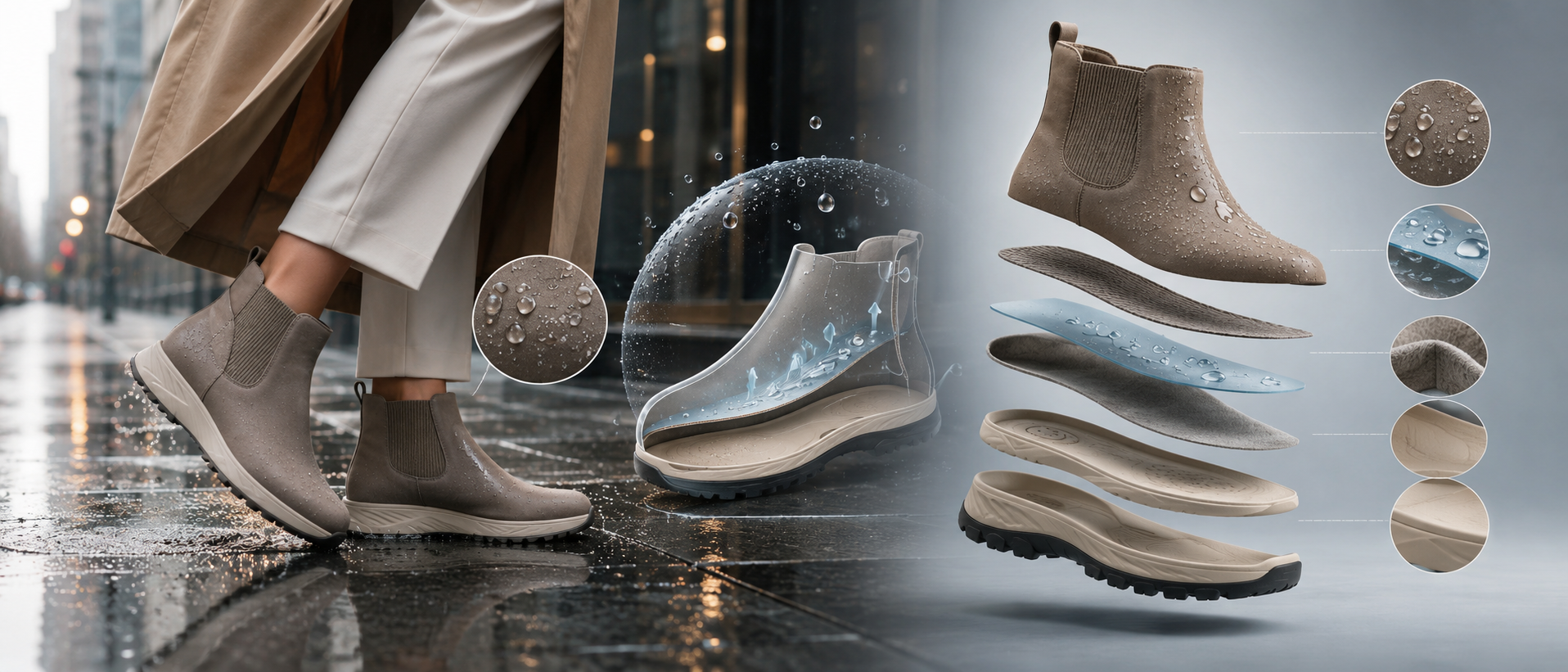
Waterproof in footwear means protection against water entering the inside of the shoe. Depending on the model, this protection can come from a special membrane, a water-repellent treatment, a multi-layer inner construction, or a combination of several solutions.
You can imagine this technology as a hidden protective layer inside the shoe. It works as a barrier against water from the outside, but it should also allow moisture from the foot to gradually escape. This helps feet stay drier not only because rain does not get in, but also because internal moisture does not build up as quickly.
It is important to understand that Waterproof does not always mean the shoes can be fully submerged in water. Most urban models are designed for rain, wet asphalt, small puddles, morning dew, and slush, not for standing in deep water for a long time. That is why you should look not only at the word Waterproof, but also at the real purpose of the pair.
How moisture protection works
The main goal of Waterproof technology is to stop water from getting in through the upper, seams, joints, and other vulnerable areas. To do this, manufacturers use dense water-repellent materials, special coatings, membranes, and more sealed constructions.
In quality footwear, moisture protection should work together with ventilation. If the shoe blocks water but does not allow vapor to escape, the foot can sweat quickly. In that case, the feeling of moisture appears anyway, even if the rain has not entered from the outside.
That is why good Waterproof footwear solves two problems at once: it protects against external moisture and helps maintain a more comfortable microclimate inside. This is especially useful for transitional-season shoes, when the weather can change several times in one day.
Who needs shoes with Waterproof technology most?
This type of footwear is useful not only for hiking or sports. In the city, Waterproof protection can be even more important because rain often starts unexpectedly, and there is not always a chance to change shoes.
Shoes with moisture protection are especially useful for people who walk a lot, use public transport, work outside the home, often walk with children or pets, travel, go out of town, or simply do not want to worry about every puddle.
For daily wear, you can look at transitional boots, closed sneakers, practical knee-high boots, and other models where moisture protection is combined with a comfortable fit.
Main advantages of Waterproof footwear
The biggest advantage of this footwear is the feeling of confidence in unpredictable weather. If the sky is cloudy in the morning and it starts raining at midday, you do not have to change your plans or avoid every wet surface.
- feet stay dry for longer when exposed to moisture;
- the shoes are better suited to rain, slush, and wet asphalt;
- materials are often more resistant to wear;
- the pair becomes more practical for everyday use;
- comfort is easier to maintain in changing weather;
- the shoes fit an active city lifestyle.
For women looking for transitional shoes, Waterproof technology can be a strong advantage. This is especially true if you want a pair you can wear often, not only on completely dry days.
Waterproof and water-repellent treatment: what is the difference?
These two ideas are often confused. A water-repellent treatment usually means that the outer material has been coated with a special protective product. Water is absorbed more slowly, drops may roll off the surface, and the shoes stay dry longer. However, this protection can weaken over time and needs to be renewed.
Waterproof usually suggests a more serious form of protection: a membrane, an inner layer, or a special construction. Such shoes are designed for more active contact with moisture, although they still need proper care.
If you need shoes for occasional walks in light rain, a water-repellent treatment may be enough. If you often walk on wet streets, choose footwear for autumn, travel, or changeable weather, Waterproof technology is usually the better option.
Which types of shoes most often use Waterproof technology?
Waterproof technology is most often found in closed shoes designed for active wear and bad weather. This makes sense: these models come into contact with rain, wet ground, slush, and cold air more often.
In an urban wardrobe, these can be ankle boots, knee-high boots, high-top sneakers, insulated models, and practical everyday shoes. For the cold season, winter boots and knee-high boots with protection against snow and melted water are especially useful.
For milder weather, lighter closed models, canvas shoes, or sneakers with protective treatment may be enough. Open summer footwear, such as sandals, usually does not need full Waterproof technology because its purpose is different: lightness, ventilation, and openness.
How to choose Waterproof shoes for the city
When choosing a pair, do not look only at the presence of the technology. The overall construction matters just as much. Even strong moisture protection will not help if the shoes are uncomfortable, too stiff, or do not fit the foot properly.
Check the sole. For rainy weather, it should be stable and not too smooth. Good grip is just as important as water protection. Wet tiles, asphalt, and stairs can be slippery, so the sole should help you feel confident while walking.
The height of the model also matters. If you often walk through puddles, very low shoes may let water enter from above, even if the material itself is protected. For autumn and winter, boots that cover the foot and ankle area are usually more practical.
Materials that work well in rainy weather
For Waterproof footwear, the protective layer is important, but so is the outer material. Genuine leather, when properly treated, can be a good choice for the city: it is strong, looks elegant, and can last a long time. However, it needs regular cleaning and protection.
Artificial and synthetic materials can be resistant to moisture, but they should not be too rigid or reduce comfort too much. Textile models with a membrane can be light and comfortable, especially in sports and outdoor shoes.
If you are choosing shoes for everyday wear, look for balance: the material should be dense enough for protection, but not rough. The pair should hold the foot well, avoid squeezing the toes, and not create a feeling of overheating.
What to check during try-on
Waterproof footwear often has a denser construction, so trying it on is especially important. The pair should not feel too tight. If there is a membrane, lining, or extra inner layer, the foot may need a little more space.
Check whether the shoes press on the instep, whether the toes touch the front, and whether the edge rubs around the ankle. If the model is for autumn or winter, try it on with the kind of socks you plan to wear most often.
It is also worth taking a few steps. A good pair with moisture protection should feel stable, not too heavy, and should not block natural movement. If the shoes already feel stiff and uncomfortable during try-on, Waterproof technology will not make them comfortable later.
How to care for Waterproof shoes
Proper care helps extend the life of moisture protection. Even if the shoes have Waterproof technology, they still need attention. Dirt, dust, salt, and incorrect drying can damage the materials and reduce performance.
- clean the shoes from dirt with a soft brush or damp cloth;
- do not dry the pair on a radiator or near strong heat sources;
- let the shoes dry naturally;
- use care products suitable for the upper material;
- renew the water-repellent treatment if the manufacturer recommends it;
- store the shoes in a dry, well-ventilated place.
It is especially important not to overheat the shoes while drying. High temperature can damage glue, membranes, leather, or inner materials. It is better to fill the pair with paper and let it dry gradually.
Common mistakes when choosing Waterproof footwear
The first mistake is thinking that Waterproof means absolute protection. Even protected shoes have limits. If you stand in water for a long time or wear the pair in conditions it was not designed for, moisture can enter through the top, tongue, seams, or edges.
The second mistake is choosing a model that is too low for heavy rain. The material may be protected, but water can easily enter from above if the shoe does not cover the foot enough.
The third mistake is forgetting breathability. If shoes do not breathe, the feet can sweat, and the feeling of moisture appears from the inside. That is why you should look not only for water protection, but also for a comfortable construction.
The fourth mistake is not caring for the pair after rain. Waterproof protection helps against moisture, but dirt and salt still need to be removed. This keeps the shoes looking better and helps them last longer.
What to wear with Waterproof shoes
Modern Waterproof footwear no longer looks only like hiking equipment. Today, you can find urban models that work well with everyday wardrobes: jeans, coats, padded jackets, knitted sets, jackets, wide trousers, and midi dresses.
Black or brown boots easily fit autumn outfits. Light-colored models look softer and suit a minimalist wardrobe. Sporty versions can be worn with jeans, leggings, hoodies, and oversized jackets.
If you need a more feminine pair, choose neat boots or knee-high boots with a clean design. They can replace regular transitional shoes in rainy weather without breaking the style of the outfit.
Advice from Happy Heels
If you are choosing your first pair with Waterproof technology, start with a universal model: closed boots or sneakers in black, brown, beige, or dark grey. These colors are easy to combine with your wardrobe and work for most rainy days.
Before buying, think about where you will wear the pair most often. For short city routes, light moisture protection may be enough. For frequent walks, slush, and colder seasons, it is better to choose a more closed model with a stable sole and quality inner construction.
FAQ: common questions about Waterproof shoes
Do Waterproof shoes never get wet?
They protect better against moisture, rain, and wet surfaces, but not all models are designed for long submersion in water. It depends on the construction, height, seams, and intended use of the pair.
Can I wear Waterproof shoes every day?
Yes, if the model is comfortable, fits correctly, and offers enough breathability. For daily wear, a comfortable last, stable sole, and proper care are especially important.
Do Waterproof shoes still need care?
Yes. Moisture protection does not replace cleaning, correct drying, and material care. Without care, shoes lose their appearance and protective properties faster.
Is Waterproof suitable for winter?
Yes, especially when the technology is combined with insulation and a stable sole. Such footwear helps protect against snow, melted water, and slush.
How is Waterproof different from regular impregnation?
Regular impregnation usually works as an outer water-repellent layer. Waterproof normally means more thought-out protection: a membrane, inner construction, or special materials.
Quick summary
- Waterproof helps protect shoes from rain, slush, and wet asphalt.
- Good Waterproof footwear should protect against water while keeping comfort inside.
- For the city, a stable sole, comfortable last, and proper shoe height are especially important.
- Even shoes with moisture protection need care and correct drying.
- This technology is especially useful for transitional, winter, and active everyday footwear.
Conclusion
Shoes with Waterproof technology are a practical solution for rainy and changeable weather. They help keep feet dry, reduce discomfort from wet asphalt, and make everyday footwear more reliable.
Still, when choosing a pair, do not look only at the word Waterproof. Real comfort comes from a comfortable last, quality materials, a stable sole, the right model height, and proper care. When all these elements come together, such a pair can become one of the most useful items in your wardrobe for the rainy season.