





A Healthy Back Starts with Shoes: What You Need to Know When Choosing a Pair
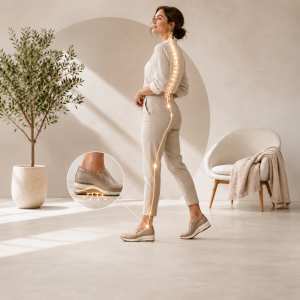
When we choose shoes, we usually look at the color, model, heel, and how well the pair matches our clothes. But there is another important detail that many women forget: shoes affect not only the feet, but also posture, walking, knees, lower back, and overall well-being.
If a pair is uncomfortable, too stiff, too flat, or does not hold the foot well, the body starts to compensate. A woman may get tired faster, feel heaviness in the legs, tension in the lower back, or discomfort in the back after an ordinary day. That is why comfortable shoes are not just a nice bonus, but an important part of self-care.
In this article, we will explain how shoes affect back health, why the right fit is so important, and how to choose shoes that are not only beautiful, but also comfortable for daily wear.
Why back health is connected with shoes
The foot is the base of our movement. With every step, it takes the load, helps keep balance, and softens the impact with the ground. If shoes do not support the foot correctly, the load starts to spread unevenly.
Because of this, not only the feet can suffer. Tension gradually moves higher: to the knees, hip joints, lower back, and spine. That is why even a small mistake when choosing shoes can affect posture and well-being over time.
It is especially important to choose shoes for everyday wear carefully. These are the shoes we wear most often: to work, for walks, to the store, on trips, and for daily errands. If such a pair is uncomfortable, the body receives extra stress every day.
For an active lifestyle, you can pay attention to sneakers or other models with a soft sole and good foot support.
Foot support is the base of good posture
The foot has natural arches that help the body distribute weight correctly. If shoes are too soft, shapeless, or do not support the foot at all, walking can change. As a result, the muscles of the legs, pelvis, and back begin to work with extra tension.
Good women’s shoes should help the foot stay in a stable position. It is important that the heel does not slip, the toes are not squeezed, and the sole is not too thin.
If you walk a lot, work on your feet, or often feel tiredness in the lower back, it is worth paying more attention to how your shoes fit. Sometimes the problem is not in the back itself, but in the fact that the foot stays in an uncomfortable position all day.
For daily wear, it is better to choose models that hold the foot well and do not force it to stay tense all the time.
Why shoes that are too flat can cause tiredness
Many women think that completely flat shoes are always the most comfortable. But this is not always true. If the sole is very thin and does not provide cushioning, every step can feel harder.
Ballet flats, slides, or light sandals without support can be comfortable for a short time, but they are not suitable for long walks for everyone. The foot can get tired, and the load may gradually move to the knees and lower back.
This does not mean that you need to give up flat shoes completely. It is important to choose models with a soft insole, a fairly firm sole, and a good fit. Then the shoes will look light, but still remain comfortable.
If you like models without heels, pay attention to ballet flats with a more stable sole and a comfortable shape.
How heels affect the back
Heels can make an outfit more feminine and elegant, but their height and shape matter a lot. A heel that is too high changes the body position: the center of gravity shifts, the lower back may become more tense, and the back muscles get tired faster.
If you wear high heels every day and for many hours, this can cause discomfort in the feet and back. This is especially true if the heel is thin, unstable, or the shoes do not stay well on the foot.
A more comfortable option for daily life is a stable heel of low or medium height. It helps keep elegance, but does not create as much tension as a very high stiletto.
For special occasions, you can choose high heels, while for a long day it is better to keep a more stable and softer pair.
Cushioning: why the sole is so important
Every step creates a small impact load. If the sole is too hard or too thin, this impact is absorbed poorly. As a result, the legs get tired faster, and the body can feel more tension.
A good sole should be soft enough, but not shapeless. It should help the foot move naturally and protect it from hard surfaces at the same time.
Cushioning is especially important for women who walk a lot in the city, spend the day on their feet, or choose shoes for walks. In these situations, comfortable shoes help not only the feet, but also the back.
For an active day, models from the sport shoes category can be suitable if they fit well and match your lifestyle.
Size and width: why you should not tolerate discomfort
The wrong size is one of the most common causes of discomfort. If shoes are too small, they squeeze the toes, limit the natural movement of the foot, and can cause rubbing. If the pair is too large, the foot slides inside, and the muscles constantly tense up to hold the shoe.
It is important to consider not only foot length, but also width. Some women have narrow feet, while others have wider feet or a higher instep. The same model can be perfect for one woman and uncomfortable for another.
If shoes already press during fitting, do not hope that they will definitely stretch. Sometimes the material becomes softer, but if the shape is not right for you from the start, the pair can remain uncomfortable.
When you think about how to choose shoes, always pay attention to how they feel while walking, not only to the number on the box.
Heel fixation and stability
Shoes should stay well on the foot. If the heel keeps slipping out, the foot starts to tense. This can change your walking pattern and cause tiredness not only in the legs, but also in the lower back.
This is especially important for sneakers, boots, pumps, sandals, and any shoes for everyday wear. Good fixation helps you feel more confident while walking and reduces unnecessary tension.
If you choose sandals, make sure the straps are not too stiff and do not cut into the skin. If you choose closed shoes, check that the back part does not rub the heel.
For the warm season, you can choose sandals with soft straps and a stable fit.
Materials and softness of shoes
The material also affects comfort. Stiff shoes can press, rub, and force the foot to stay tense. Softer and better-quality materials adapt more easily to the shape of the foot.
For daily wear, it is good to choose shoes that do not squeeze the toes, do not rub the heel, and allow the foot to feel free. In warm weather, ventilation is also important so the foot does not overheat.
If you often feel tiredness in your legs or back after only a few hours outside, it is worth checking how well your shoes suit you by material, shape, and fit.
Beautiful women’s shoes should be pleasant not only visually, but also while wearing.
What shoes are better for a long day
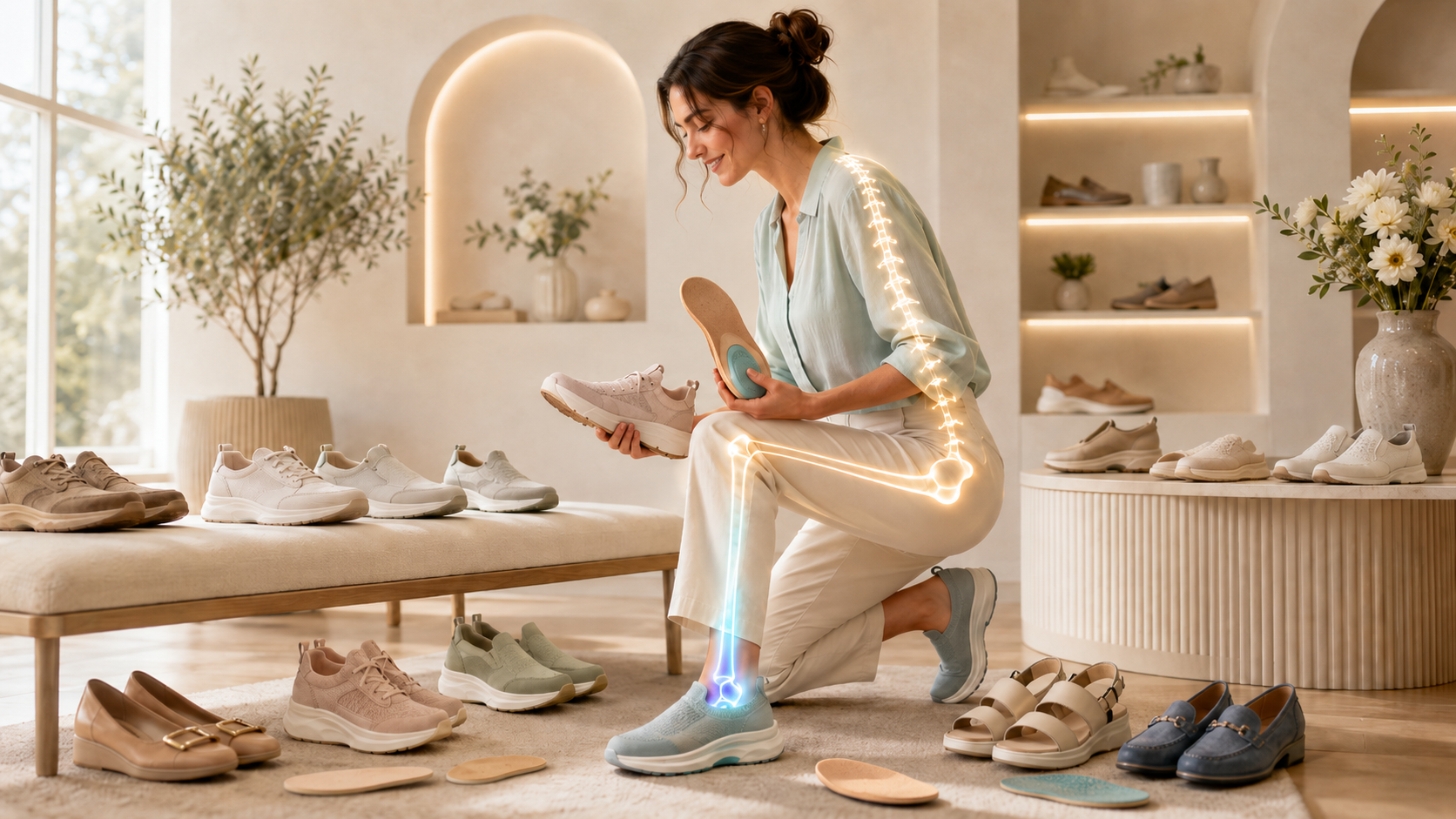
For a long day, it is better to choose shoes that combine stability, softness, and the right fit. These can be sneakers, comfortable ballet flats, loafers, boots, sandals, or shoes with a low stable heel.
The most important thing is that the pair should not require patience from you. If the shoes rub, press, or make you think about every step, they are not suitable for daily wear.
For work, walks, and trips, it is good to have several comfortable pairs and alternate them. This helps avoid overloading the same areas of the foot every day.
For a basic wardrobe, you can look at loafers and moccasins if they fit well and match your lifestyle.
How to understand that shoes do not suit you
Sometimes uncomfortable shoes do not show the problem immediately. In the store, a pair may seem fine, but after a few hours of wearing it, tiredness, pressure, rubbing, or lower back pain may appear.
There are several signs that shoes do not suit you: the toes are squeezed, the heel slips out, the foot slides forward, the sole is too hard, and after a walk you feel tiredness in the legs or back.
It is also worth paying attention to your walking. If you start walking unnaturally, too carefully, or feel unstable in the shoes, it is better to choose another pair.
Shoes for everyday wear should help you move freely, not force the body to adjust all the time.
How to choose shoes that care for your back
When choosing shoes for daily wear, it is important to check several details. See whether the insole is soft enough, whether the sole is stable, whether the toes are not squeezed, and whether the heel is well fixed.
Do not choose a pair only by appearance. Even the most fashionable model will not bring joy if it is difficult to walk in. It is better to look for balance: stylish design, comfortable shape, quality material, and the right size.
If you spend a lot of time on your feet, give preference to models with cushioning and a stable sole. If you like heels, choose a low and stable option for daily wear.
This approach will help you choose comfortable shoes that support not only your feet, but also your overall well-being.
Tips: how to choose shoes for a healthy back
- Choose shoes according to the size and width of your foot, not only by beautiful design.
- Check that there is enough space for the toes.
- Do not buy a pair that presses strongly during fitting.
- For daily wear, choose a soft insole and a stable sole.
- Avoid soles that are too thin for long walks.
- Do not wear very high heels every day and for many hours in a row.
- For everyday wear, it is better to choose a stable low heel.
- Make sure the heel does not slip while walking.
- Choose materials that do not rub or squeeze the foot.
- Alternate different pairs so you do not overload the same areas of the foot every day.
- If your back or legs hurt after wearing shoes, do not ignore this signal.
- Remember that quality women’s shoes should be beautiful and comfortable at the same time.
Common mistakes when choosing shoes
The first mistake is buying shoes only because of their appearance. A beautiful pair can look perfect, but if it presses or rubs, you will not be able to wear it often.
The second mistake is choosing shoes that are one size smaller or larger. A tight pair squeezes the foot, while a pair that is too loose forces the foot to tense with every step.
The third mistake is thinking that a flat sole is always better than a heel. If the sole is very thin and does not support the foot, it can also cause tiredness.
Another mistake is tolerating discomfort for too long. If shoes regularly cause pain, rubbing, or tension in the back, it is better to replace them with a more suitable model.
Conclusion
A healthy back really starts with shoes. The way a pair fits the foot, how it cushions each step, and how it supports movement affects walking, posture, and overall well-being.
The right shoes should not make you tolerate pain. They should help you move easily, confidently, and without unnecessary tension. This is especially important for women who spend a lot of time on their feet and choose shoes for every day.
When you know how to choose shoes by size, fit, sole, and material, caring for comfort becomes easier. Good shoes for everyday wear support not only the feet, but also your lifestyle.
Quality women’s shoes are a combination of style, comfort, and self-care. That is why, when choosing a new pair, you should look not only at the design, but also at how your body feels in these shoes.