





How to Choose Shoes If One Foot Is Slightly Bigger Than the Other
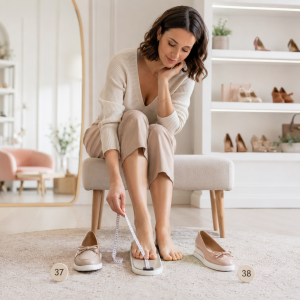
Different foot lengths are not uncommon. Many women may have one foot that is slightly bigger than the other: by a few millimeters, half a size, or even a full size. This often becomes noticeable when buying shoes. One shoe fits well, while the other feels tight. Or, on the contrary, the larger foot feels comfortable, but the shoe on the smaller foot slips slightly.
Because of this, choosing women’s shoes can be more difficult. Especially when you want a pair that is not only beautiful but also comfortable. After all, comfortable shoes should fit both feet well, not rub, not squeeze the toes, and not interfere with walking.
In this article, we will explain in simple words how to choose shoes if one foot is slightly bigger than the other, what to pay attention to when trying them on, and which accessories can help make the fit more comfortable.
Why One Foot Can Be Bigger Than the Other
A small difference between the feet is normal. The human body is not completely symmetrical, so the left and right foot may differ slightly in length, width, or instep.
Sometimes the difference is almost unnoticeable. But sometimes, when buying shoes, it is felt immediately: on one foot the pair fits perfectly, while on the other it starts to press or feels loose.
The problem is especially noticeable in closed shoes: pumps, ankle boots, sneakers, and boots. If the model is stiff, narrow, or has no adjustment, even a small difference can cause discomfort.
The main thing is not to try to “put up with it.” If the shoe presses on the bigger foot, it can lead to rubbing, pain, tiredness, and nail problems. That is why it is better to choose the right pair from the start.
First, Measure Both Feet
Before buying shoes, it is important to understand exactly which foot is bigger. You should not rely only on your usual size. It may be inaccurate, especially if you have not measured your feet for a long time.
You can measure your feet at home:
- Place your foot on a sheet of paper.
- Trace around it with a pencil, holding the pencil straight.
- Measure the distance from the heel to the longest toe.
- Repeat the same with the other foot.
- Compare the results.
It is better to take measurements in the evening, because during the day the feet can swell slightly. This is especially important if you are choosing everyday shoes in which you plan to walk a lot.
If one foot is longer, it should be the main guide when choosing the size.
Choose Shoes According to the Bigger Foot
The most important rule is to choose shoes according to the bigger foot. Not according to the smaller one, not according to the “average” size, but exactly according to the foot that is longer or wider.
Why is this important? Because the smaller foot can be fixed slightly with an insole, half insole, insert, or strap. But if the shoe is too small for the bigger foot, it is almost impossible to fix.
Tight shoes can press on the toes, rub the heel, and cause pain when walking. This is especially risky for closed models with a narrow toe.
That is why it is better to leave a little free space than to buy a pair that squeezes the foot. The right fit is when the toes have enough room, the heel does not slip out too much, and the foot feels stable.
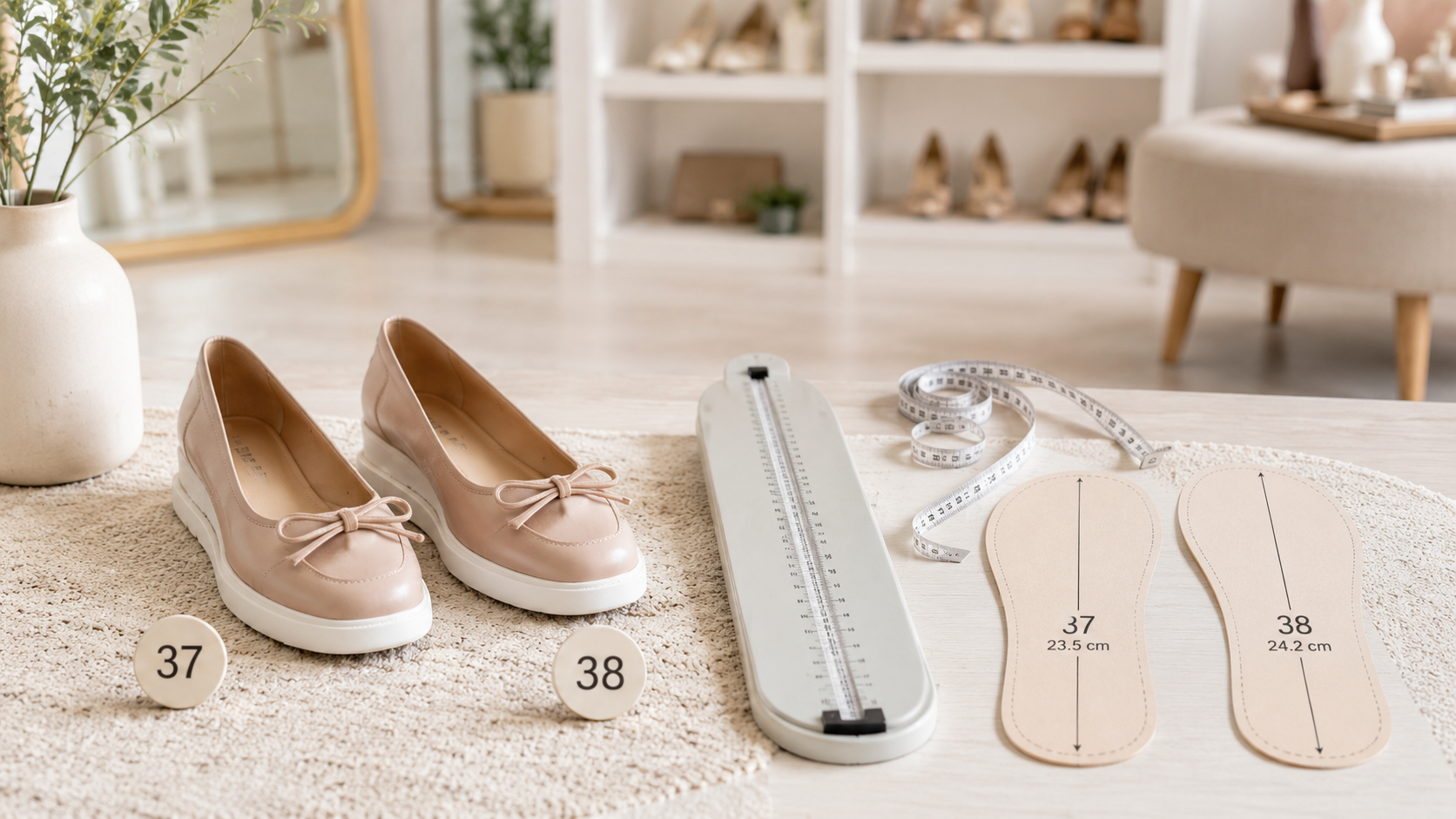
How to Understand That the Shoes Fit Correctly
When trying shoes on, pay attention to how both feet feel. Walk around, stand for a while, and take a few steps.
On the bigger foot, the shoe should not press on the toes, sides, or top of the foot. There should be no feeling that the foot is “pushing into” the toe area. There should be a small amount of space between the longest toe and the end of the shoe.
On the smaller foot, the shoe may feel slightly looser, but it should not slip off while walking. If the heel constantly comes out, the foot slides forward, or you have to tense your toes to hold the shoe on, the pair will be uncomfortable.
Good comfortable shoes do not make you think about every step. The foot stays calm and natural inside them.
Which Models Are Better to Choose
If one foot is slightly bigger than the other, it is better to choose shoes that can be adjusted.
Good options include:
- sneakers with laces;
- lace-up ankle boots;
- shoes with a strap;
- sandals with adjustable fastenings;
- loafers with a soft fit;
- boots with elastic inserts;
- models made of soft leather or suede.
Lacing helps you adjust each shoe separately to each foot. On the bigger foot, you can leave a little more space, and on the smaller foot, tighten it more.
Straps also fix the foot well, especially in pumps and sandals. This is important if the smaller foot “moves around” slightly inside the shoe.
For everyday wear, it is better to choose models with a soft sole, a stable last, and a toe shape that is not too narrow.
Which Models Can Be Uncomfortable
Not every type of footwear is suitable if the feet are different sizes. The most difficult options are stiff models without adjustment.
Be careful when choosing:
- narrow pumps with a pointed toe;
- shoes without a strap;
- stiff ballet flats;
- shoes made of rough material;
- models with a very high heel;
- boots with a narrow instep;
- slip-ons that cannot be adjusted.
This does not mean that such shoes cannot be worn at all. But they need to be tried on especially carefully. If one shoe presses and the other slips off, it is better to look for another model.
Which Accessories Can Help
If the shoes are chosen according to the bigger foot, the smaller foot may need additional support. Simple accessories can help with this.
You can use:
- a thin insole;
- a half insole for the front part of the foot;
- a gel insert;
- a heel cushion;
- a heel grip;
- silicone pads;
- protective plasters against rubbing.
For example, if the shoe is slightly loose on the smaller foot, a thin insole will help reduce the extra volume. If the heel slips out, you can use a soft heel grip. If the foot slides forward in pumps, a gel half insole can help.
The main thing is not to overload the shoe with too many inserts. The accessory should improve the fit, not create new pressure.
How to Choose Shoes Online
You can buy shoes online when your feet have different lengths, but you need to be more careful. Do not choose only by your usual size. Always check the size chart and the insole length.
Before ordering:
- measure both feet;
- use the bigger foot as your guide;
- check the insole length in the description;
- read reviews about the fit and width of the model;
- check whether there are laces, straps, or soft inserts;
- check the exchange and return conditions.
If the model runs small, it is better to choose a larger size. If the shoes are designed for wide feet and your smaller foot feels too loose, think about whether insoles will help or whether it is better to choose another model.
Online shopping will be more successful if you understand not only the length of your foot, but also its width, instep, and fit features.
Tips: How to Choose Shoes When Your Feet Are Different Sizes
- Always measure both feet, not just one.
- Use the bigger foot as your guide.
- Do not buy tight shoes hoping they will stretch.
- Choose models with laces, straps, or Velcro.
- Use thin insoles or inserts for the smaller foot.
- Avoid a toe shape that is too narrow if the bigger foot presses against the shoe.
- Try shoes on in the evening, when the feet are slightly larger.
- Check the shoes not only while standing, but also while walking.
- For long walks, choose a soft sole and good fixation.
- When buying online, check the insole length and reviews.
- Do not buy shoes if one foot feels pain right away.
- For heels, use gel pads so the foot does not slide forward.
- For everyday shoes, choose comfort over a fashionable shape.
- If the difference between your feet is large, it is better to consult a specialist or choose custom insoles.
What Not to Do
The main mistake is buying a size according to the smaller foot. In the store, it may seem that the pair is just a little tight, but after several hours of wear, the discomfort will become stronger. The bigger foot will suffer constantly.
The second mistake is choosing shoes that are too stiff. If the material does not adapt to the foot, the difference between the feet will be felt more strongly.
The third mistake is tolerating pain for the sake of beauty. Stylish women’s shoes should not ruin your walk or your mood. If all day you think only about taking your shoes off as soon as possible, it means the pair was chosen incorrectly.
You should also avoid shoes that are too large and have no fixation. If the smaller foot constantly slides, this can also lead to rubbing and tiredness.
When to Consult a Specialist
If the difference between the feet is small, it is usually enough to choose the right size and use an insole. But if the difference is noticeable, the shoes constantly rub, pain appears, or you have calluses or nail problems, it is better to consult a specialist.
A podologist, orthopedist, or consultant in a good shoe store can help you understand what kind of fit you need. Sometimes the solution is custom insoles or models with a special width.
This is especially important if you walk a lot, work on your feet, or are looking for comfortable shoes for daily wear.
Conclusion
If one foot is slightly bigger than the other, this is not a reason to give up beautiful shoes. This feature is common, and it can easily be taken into account when buying footwear.
The main rule is to choose shoes according to the bigger foot, and, if necessary, secure the smaller foot with an insole, insert, or strap.
It is better to choose soft materials, a comfortable last, adjustable fastenings, and the right size. When you know how to choose shoes according to the features of your feet, shopping becomes easier. And your favorite pair brings not pain and disappointment, but confidence, lightness, and comfort every day.