







Medical Footwear: How to Choose
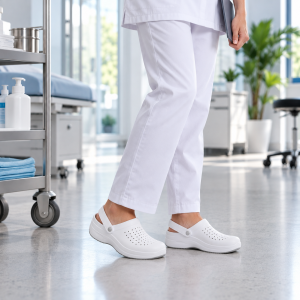
The work of doctors, nurses, pharmacists, cosmetologists, and laboratory employees often involves spending many hours on their feet. Medical footwear should therefore be lightweight, stable, hygienic, and comfortable throughout the entire shift. A properly selected pair can help reduce fatigue and provide confidence during active movement.
When choosing medical footwear, consider not only its appearance but also its fit, material, sole, ventilation, and method of securing the foot. There is no single option suitable for every situation: footwear intended for a treatment room may have different characteristics from a pair worn in a warm salon.
Essential Qualities of Comfortable Work Footwear
Comfortable medical footwear should not be heavy, rigid, or excessively loose. The foot needs adequate support while walking, and the toes require enough space. The selected model should remain securely in place, avoid rubbing the skin, and not force the wearer to tense the foot constantly to keep the shoe from slipping.
Practicality is equally important. The material should be easy to clean and able to retain its shape after regular care. For rooms with smooth floors, choose a stable sole with a clearly defined tread. It should bend naturally at the front while remaining sufficiently firm and supportive.
Clogs, Shoes, or Sandals
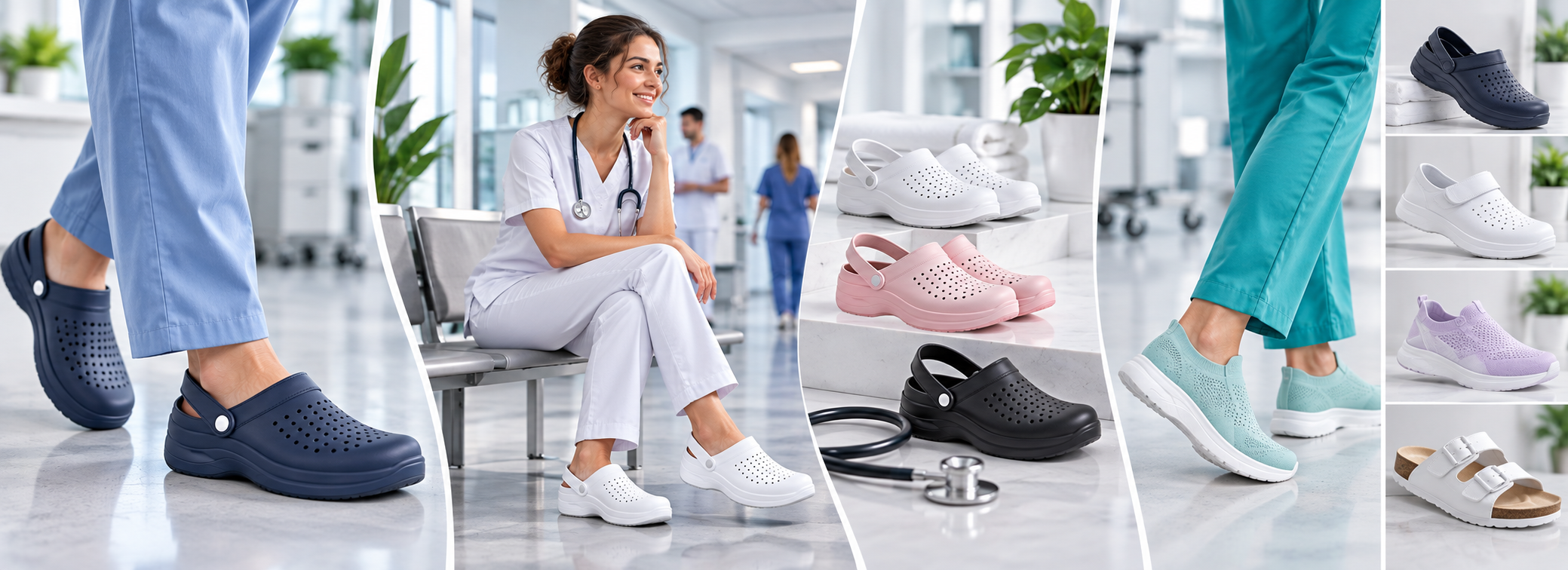
Clogs are popular because they are lightweight, easy to maintain, and quick to remove. For active work, models with a movable heel strap are preferable because they provide additional stability. A closed toe offers greater protection, while ventilation openings help maintain a comfortable environment inside the footwear.
Shoes with a closed heel fit more securely and are suitable for professionals who frequently move between rooms. They are also appropriate for consultations, pharmacies, and reception areas, where both comfort and a neat appearance matter. Suitable options can be found in the collection of women’s shoes.
Sandals provide good ventilation and are suitable for warm indoor environments. Models with adjustable straps are preferable because they allow the fit to be adapted more precisely to the width of the foot. More open styles are available in the category of women’s sandals.
Choosing the Right Material
Models made from polymer materials are valued for their low weight and simple maintenance. Their surfaces are usually easy to clean, making them convenient for everyday use. Before cleaning, always check the manufacturer’s instructions, as not every material is compatible with all detergents and disinfectants.
Genuine leather gradually adapts to the shape of the foot, allows air to circulate, and is suitable for extended wear. However, it requires more delicate care and proper drying. Textile inserts can improve ventilation but tend to absorb moisture and dirt more quickly, so the specific conditions of the workplace should be considered.
Sole Design and Stability
Floors in medical facilities can be smooth, making reliable traction particularly important. It is preferable to choose a sole with a slip-resistant tread and a sufficiently wide contact area. Very high platforms and unstable heels are unsuitable for work involving frequent or rapid movement.
The sole should help absorb the impact of each step without restricting the foot’s natural movement. Before purchasing, walk several steps, turn around, and check how the footwear bends. If the pair feels rigid, slips, or forces you to change your natural walking pattern, it is better to consider another model.
Anatomical Insoles and Foot Support
The insole affects pressure distribution and overall comfort. Ideally, it should have a soft surface, support for the longitudinal arch, and a shaped heel area. A removable insole is easier to air, clean, dry, and replace when necessary.
People with specific foot conditions or existing orthopedic problems should select individual insoles with the assistance of an appropriate healthcare professional. Ready-made options may improve comfort but cannot replace a professional assessment. Available products can be viewed in the collection of shoe insoles.
Finding the Correct Size and Fit
Work footwear should preferably be tried on during the second half of the day, when the feet may be slightly larger. Wear socks of approximately the same thickness as those you intend to use at work. There should be a little space between the toes and the front of the shoe, but the foot should not slide inside with every step.
Check whether the edges create pressure, the heel area causes friction, or the foot moves inside the shoe. Footwear that is too tight can create discomfort and pressure points, while an excessively loose pair makes the foot muscles work harder. Do not purchase an uncomfortable model in the hope that it will eventually stretch enough.
Choosing Footwear for Different Work Environments
For treatment rooms and laboratories, professionals often choose easy-to-clean footwear with a closed toe and stable sole. This construction is better suited to environments where liquids may accidentally come into contact with the shoes.
For outpatient consultations, pharmacies, dental clinics, and beauty salons, comfortable shoes or clogs with anatomical insoles may be suitable. Sandals with heel support can be considered for warm environments. If the working day involves constant movement, low weight, secure fit, and cushioning should be the main priorities.
Daily Care and Hygiene
The cleaning method depends on the material and the manufacturer’s instructions. Polymer models can usually be wiped or washed with a compatible product and then left to dry at room temperature. Leather footwear should be cleaned with a soft cloth and periodically treated with suitable care products.
Removable insoles should be taken out regularly for ventilation and drying. Footwear should not be placed directly on a radiator or dried with very hot air, as high temperatures may deform the sole, upper material, and interior components. If one pair is worn every day, having a second pair and alternating between them can be helpful.
Common Buying Mistakes
One of the most common mistakes is choosing footwear based only on appearance. Even an attractive model is unsuitable for a long shift if it is heavy, slippery, or fails to secure the foot correctly. The width of the footwear, the shape of the instep, and the ability to adjust the straps should not be overlooked.
Ordinary indoor footwear without a stable sole may also be unsuitable. Some models from the women’s flip-flops category are intended for relaxation, while active work usually requires footwear with heel support and characteristics appropriate for the workplace.
A Quick Check Before Buying
Before purchasing, make sure the footwear fits properly in both length and width, does not press against the toes, and does not slip off the heel. Check the weight of the pair, the flexibility and tread of the sole, the quality of the interior seams, ventilation, and cleaning instructions. Walk for several minutes and evaluate the comfort both while standing and moving.
Properly selected medical footwear combines comfort, stability, hygiene, and practicality. It should suit the conditions of the workplace, remain securely positioned on the foot, and feel comfortable throughout the entire shift. These qualities should be considered more important than decorative details or fashion trends.