






What Shoes Are Best for Driving: Choosing a Comfortable Pair for Trips Behind the Wheel

For many people, the car has become not just a means of transport, but part of everyday life. We spend mornings behind the wheel on the way to work, evenings in traffic, weekends on trips out of town and long hours on spontaneous journeys. We adjust the seat, mirrors, temperature and music, but often forget one detail that directly affects comfort and safety: footwear.
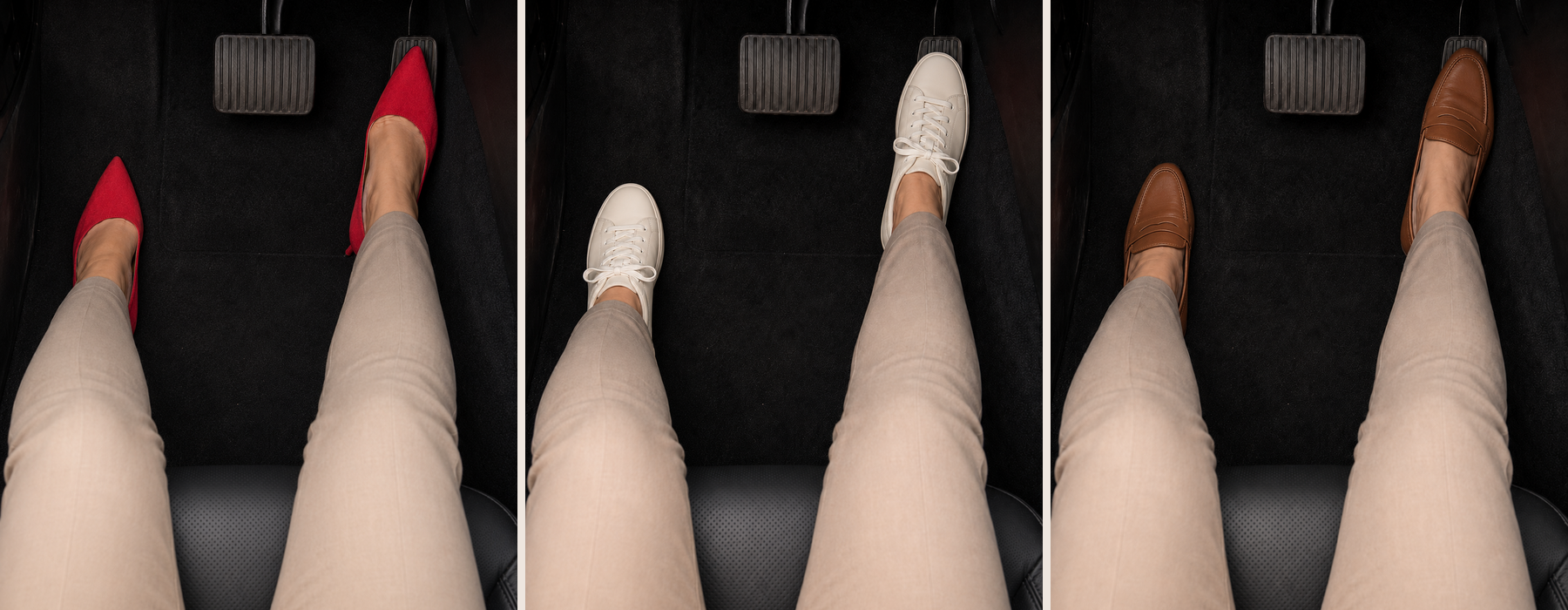
Shoes for driving should help the foot feel the pedals, move quickly from the accelerator to the brake and keep the heel stable. A beautiful pair may look perfect at the office, on a walk or at a meeting, but behind the wheel it can become uncomfortable. That is why it is important to understand which shoes are suitable for driving and which pairs are better to wear after getting out of the car.
The right choice is especially important for people who drive every day. Comfortable loafers and moccasins, lightweight sneakers, well-fitting ballet flats or flexible ankle boots can make driving calmer, more precise and more pleasant.
Why footwear affects safety while driving
While driving, the foot is constantly working: pressing the accelerator, moving to the brake and, in some cars, controlling the clutch. For precise control, the heel needs a stable support point, and the sole should allow the driver to feel the pedal. If the shoes are too high, heavy, loose or slippery, this connection becomes weaker.
When the foot does not feel the pedal properly, it becomes harder for the driver to control pressure. This is especially noticeable in traffic, during sudden braking, on wet roads or in situations where reaction time matters. That is why driving shoes are not only about style, but also about overall comfort on the road.
High heels and stilettos: beautiful, but uncomfortable for pedals
High stiletto heels can look impressive, but they are not the best choice for driving. When the heel is raised and does not have stable support, the foot remains tense. The driver presses the pedal not with a natural movement, but almost “in the air”.
This tires the leg faster and reduces precision. It becomes more difficult to move the foot quickly from the accelerator to the brake, especially if the heel catches on the mat or prevents the heel from moving freely. That is why elegant shoes with high heels are better worn after the trip, while a more comfortable pair should be kept for driving.
Platform shoes and heavy soles: why contact is lost
Heels are not the only footwear that can make driving more difficult. Shoes with a high platform or a very thick sole also reduce control over the pedals. The thicker the sole, the harder it is to feel the resistance of the accelerator and brake.
Bulky footwear can also be too wide for the pedal area. In a compact car interior, a wide sole may accidentally touch the neighboring pedal or slow down foot movement. For driving, it is better to choose shoes of moderate width, with a flexible sole and reasonable thickness.
Summer shoes for drivers: what to choose in hot weather
In summer, many people prefer open footwear, but behind the wheel it is not always comfortable. Loose slides, beach flip-flops and shoes without heel support can slip off the foot at the wrong moment. Such footwear can twist, block movement near the pedals or make precise pressure more difficult.
This does not mean you have to give up lightness in summer. For driving, it is better to choose soft summer shoes that stay securely on the foot. Textile models with a closed toe, thin moccasins, comfortable ballet flats or sneakers made from breathable materials can be good options.
If you prefer open styles, choose sandals with reliable foot support. Ideally, the pair should have a heel strap, a non-slip sole and a stable fit. Loose flip-flops, on the other hand, are better left for the beach, walks or relaxing after the drive.
Winter footwear behind the wheel: warmth and flexibility
In winter, the choice becomes more difficult. Warm boots, ugg-style models and heavy winter shoes protect well outdoors, but inside the car they can feel too bulky. A thick sole reduces sensitivity, while a stiff upper around the ankle limits foot movement.
For frequent trips, it is better to choose winter models with a moderate sole and good flexibility. If you need very warm footwear outside, you can keep a spare pair in the car for driving. This is especially practical when you spend a lot of time behind the wheel and do not want your feet to overheat in a warm car interior.
In the cold season, lighter winter boots or transitional models with a flexible sole can work well, as long as they are not too heavy and do not limit foot movement.
Sneakers for driving: when they are a good choice
Many drivers choose sneakers, and in many cases this is a very comfortable solution. A good pair holds the foot securely, does not slip, provides stability and is suitable for long journeys.
However, not all sneakers are equally comfortable behind the wheel. Very bulky sports models with a wide sole can interfere with the pedals. For driving, lightweight and flexible sneakers with moderate tread and a sole thin enough to feel pedal movement are a better choice.
Ballet flats, loafers and moccasins: a comfortable city base
For women, soft ballet flats can be a good option if they sit securely on the foot and do not slip off the heel. They are light, do not interfere with the pedals and are suitable for everyday city driving.
Loafers and moccasins are also often a successful choice. They usually have a soft upper, a comfortable fit and a flexible sole. This type of footwear looks neat, works with casual and office outfits, and remains comfortable behind the wheel.
What to look for when buying shoes for driving
The first criterion is fit. Shoes should not move around on the foot, slip off the heel or squeeze the toes. The foot should be able to move naturally, but there should not be too much empty space inside the pair.
The second criterion is the sole. The best option for driving is a flexible, non-slip sole of moderate thickness. It should bend together with the foot and should not be too wide. A very deep tread is not always convenient, because it can catch on the mat or hold small stones and dirt from the street.
The third criterion is material. Natural leather, soft suede, quality textiles or combined materials help the foot feel comfortable. It is important that the foot does not slide inside the shoe, especially in summer or after a long time in the car.
Which shoes are not suitable for driving
For driving, it is better to avoid very high heels, massive platforms, soles that are too thick and styles without secure support. Stiff high boots can also be uncomfortable if they limit foot movement.
Loose flip-flops, overly wide boots and shoes that slip off the foot easily are not the best choice either. Even if such a pair is comfortable for walking, it can create unnecessary risk in the car.
Advice from Happy Heels
If you drive often, keep one comfortable spare pair in the car. It can be soft moccasins, lightweight sneakers or simple ballet flats. This small habit helps preserve both comfort and style: you can arrive at your destination in comfortable footwear and then change into a more elegant pair.
When choosing shoes for driving, think not only about appearance, but also about how the pair behaves near the pedals. Good footwear does not distract, does not slip and helps you feel the car more confidently.
Quick summary
- For driving, it is better to choose shoes with a flexible, non-slip sole.
- High stilettos and massive platforms reduce control over the pedals.
- In summer, it is better to avoid loose flip-flops without heel support.
- In winter, footwear should be warm, but not too bulky.
- Good options include loafers, moccasins, lightweight sneakers and comfortable ballet flats.
Conclusion
The best shoes for driving are the ones in which the foot can feel the pedals, the heel remains stable and movements do not require unnecessary effort. Such footwear can still be stylish, but its main role is to give the driver comfort and confidence on the road.
A well-chosen pair makes trips calmer and more pleasant. After all, safety is built from small details: a comfortable fit, a good sole, secure support and the feeling that there is nothing unnecessary between you and the car.