







The Most Popular Shoe Cushioning Technologies: How They Work and How They Differ
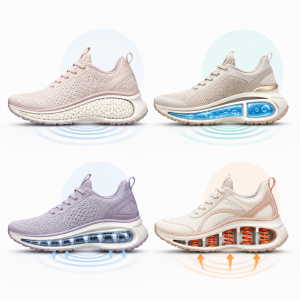
Comfortable footwear is not only about a soft upper, a good shape and the right size. Cushioning plays a major role: it helps reduce impact when walking, running or spending many hours on your feet. A good sole does more than make each step feel pleasant — it helps the feet get tired less quickly during the day.
Cushioning is especially important in sneakers, sports shoes and everyday models worn for many hours in a row. Footwear brands constantly develop new foams, air capsules, gel inserts and stabilizing elements to make shoes lighter, softer and more supportive.
However, there is no single perfect technology for everyone. Some systems provide maximum softness, others return energy with every step, while others focus on stability and foot control. That is why, when choosing a pair, it is important to look not only at the name of the technology, but also at the purpose it was created for.
Why footwear needs cushioning
With every step, the foot meets the surface and absorbs part of the impact. If the sole is too hard or too thin, the shock is felt more strongly in the heel, knees and lower back. A cushioning layer helps soften contact with the ground and makes movement smoother.
In everyday life, this becomes especially noticeable when you walk a lot: through the city, shopping centers, office spaces, stairs or uneven sidewalks. That is why good cushioning matters not only for athletes, but also for anyone who wants to feel lighter throughout the day.
Foam technologies: softness and lightness
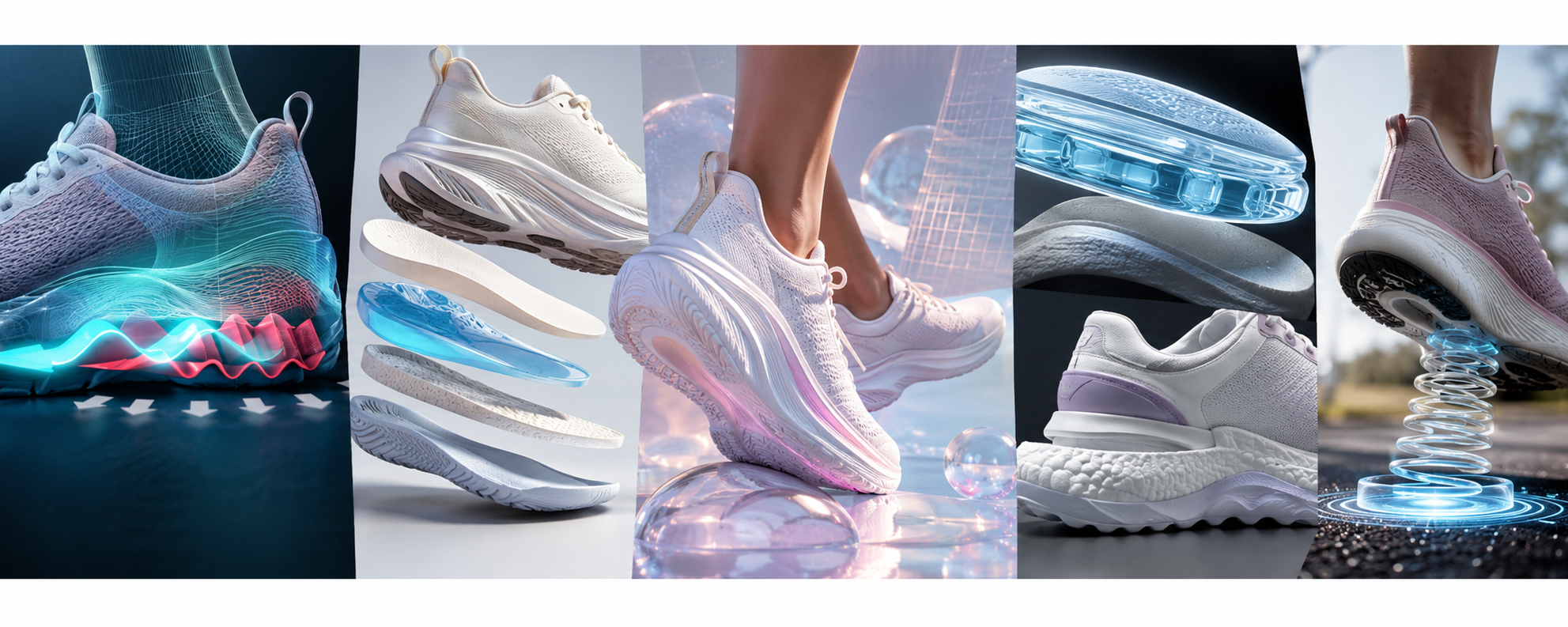
The most common type of cushioning is foam. It is used in sports and casual footwear because it is lightweight, flexible and good at absorbing impact. Classic EVA foam has long been a base for many models, while modern versions are made more elastic, durable and adaptive.
Foam soles can feel very different. Some offer a soft, comfortable sensation for calm walking. Others are more responsive: they compress on impact and help the foot push off the surface more easily.
These technologies are often chosen for sports shoes, urban sneakers and models for active days. Their main advantage is the combination of low weight and pleasant cushioning.
Responsive foam: when the step feels more dynamic
A separate category includes technologies based on responsive foam, which create the feeling of energy return. With each step, the material compresses and then quickly returns to its original shape, as if slightly pushing the foot forward.
This type of cushioning is appreciated by people who walk a lot and want not only softness, but also a more dynamic feel. However, a sole that is too soft and springy is not suitable for everyone. If the foot needs firmer support or maximum stability, it is better to choose models with a more controlled structure.
Gel inserts: cushioning in key zones
Gel technologies work differently. Special inserts are added to the sole, usually in the heel area or the front part of the foot. They help absorb impact exactly where the pressure is highest.
The advantage of gel is its durability and ability to soften specific high-load zones. Such a system can be useful for people who often feel fatigue in the heel or spend a lot of time on hard surfaces.
The downside is that gel inserts can make footwear slightly heavier. In addition, they do not always create the same “spring” effect as modern foam materials. That is why gel is usually chosen for stable comfort rather than speed or maximum lightness.
Air capsules: lightness and a strong visual effect
One of the most recognizable cushioning technologies is the air capsule inside the sole. The principle is simple: compressed air inside the unit compresses under pressure and returns to its original shape with the next step.
This system is valued for its light weight and strong visual appeal. In some models, the air cushion is visible through a transparent window in the sole, so the technology becomes not only functional, but also part of the design.
Air cushioning can feel soft and voluminous, or lower and more responsive to ground contact. Models with a large air unit are often chosen for comfort and expressive style, while more compact versions provide a closer feel of the surface.
Plates and wave-like systems: stability and control
Some cushioning technologies rely not only on softness, but also on pressure distribution. For this purpose, plates, wave-like elements or stabilizing inserts are built into the sole. They help prevent the foot from “sinking” too much and keep it in a safer position during movement.
These solutions are useful in shoes for active walking, training and running. The foam softens the impact, while the plate or stabilizing element helps spread pressure across the entire sole.
In everyday footwear, such technologies are less common, but their idea is important: comfort is not only about softness. Sometimes a sole that is too soft can tire the foot faster because it constantly has to search for stability.
How these technologies differ from one another
The main difference is in how they feel while walking. Foam usually offers lightness and softness. Responsive foam adds energy and movement. Gel cushions high-pressure zones. Air capsules combine comfort with visible design. Plates and stabilizers help control the position of the foot.
For calm city walking, soft foam soles are a good choice. For an active day, a balance between cushioning and stability is more suitable. For training and long walks, it is worth choosing models where softness is combined with proper foot support.
Common mistakes when choosing cushioned footwear
The first mistake is thinking that the softer the sole, the better the shoe. Very soft footwear may feel pleasant at first, but during long wear the foot can get tired because it lacks support.
The second mistake is choosing a technology only by name. The same type of cushioning can feel different in different models. Materials matter, but so do the shape of the sole, platform height, fit and stability.
The third mistake is ignoring the purpose of the shoe. Running, walking, office wear, travel and everyday use all require different sensations. For example, lightweight canvas shoes may be comfortable for short outings, but for a long day on your feet, a pair with stronger cushioning is usually a better choice.
How to understand which cushioning suits you
Start with your lifestyle. If you walk a lot, choose a sole that is soft but stable. If you like lightness and a more dynamic feel, responsive foam may suit you. If you often feel pressure in the heel, look for models with stronger cushioning in the rear part of the sole.
It is also important to try shoes not only while standing, but also while walking. Take a few steps and notice whether the foot stays stable, whether the sole feels too soft, whether the toes have enough space and whether the heel area feels comfortable.
Advice from Happy Heels
Do not choose footwear only because of a trendy technology. Even the most advanced cushioning will not help if the size is wrong or the model does not suit your foot. Comfort comes from the combination of sole, shape, material and fit.
For the warm season, you can choose lighter models from the summer shoes category, while for active everyday wear, sneakers or sports pairs with good support and a stable sole are a better option.
Quick summary
- Cushioning helps reduce impact while walking.
- Foam provides lightness and softness, while responsive foam returns energy.
- Gel inserts work well in high-pressure zones.
- Air capsules combine comfort with expressive design.
- Plates and stabilizers help control the position of the foot.
Conclusion
Cushioning technologies make footwear more comfortable, but each of them works in its own way. Some are created for softness, others for responsiveness, and others for stability and control. That is why, when choosing a pair, it is important to understand what kind of feeling you need in real life.
Good footwear does not simply soften the step — it helps you move more easily, more confidently and with less fatigue. This is why cushioning has become one of the key technologies in modern footwear.