






What to Do If Shoes Stain Your Feet: Simple Ways to Fix the Problem
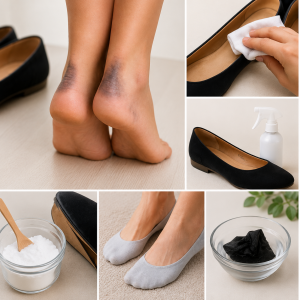
Sometimes you find the perfect pair: the shoes look beautiful, match your wardrobe, do not press and feel comfortable. But after the first day of wearing them, an unpleasant surprise appears — stained feet, colored socks, marked tights or a stained insole. This situation is frustrating, especially if the shoes are comfortable and you do not want to give them up.
Shoes can stain your feet for different reasons: unstable dye, moisture, excessive sweating, poor-quality lining or lack of proper care. It is important not to ignore the problem, because the dye can stain clothes, irritate the skin and make wearing the pair uncomfortable.
In this article, we will explain what to do if shoes stain your feet, how to protect your skin and socks, how to treat the inside of the pair and how to choose shoes so this problem happens less often.
Why shoes stain your feet
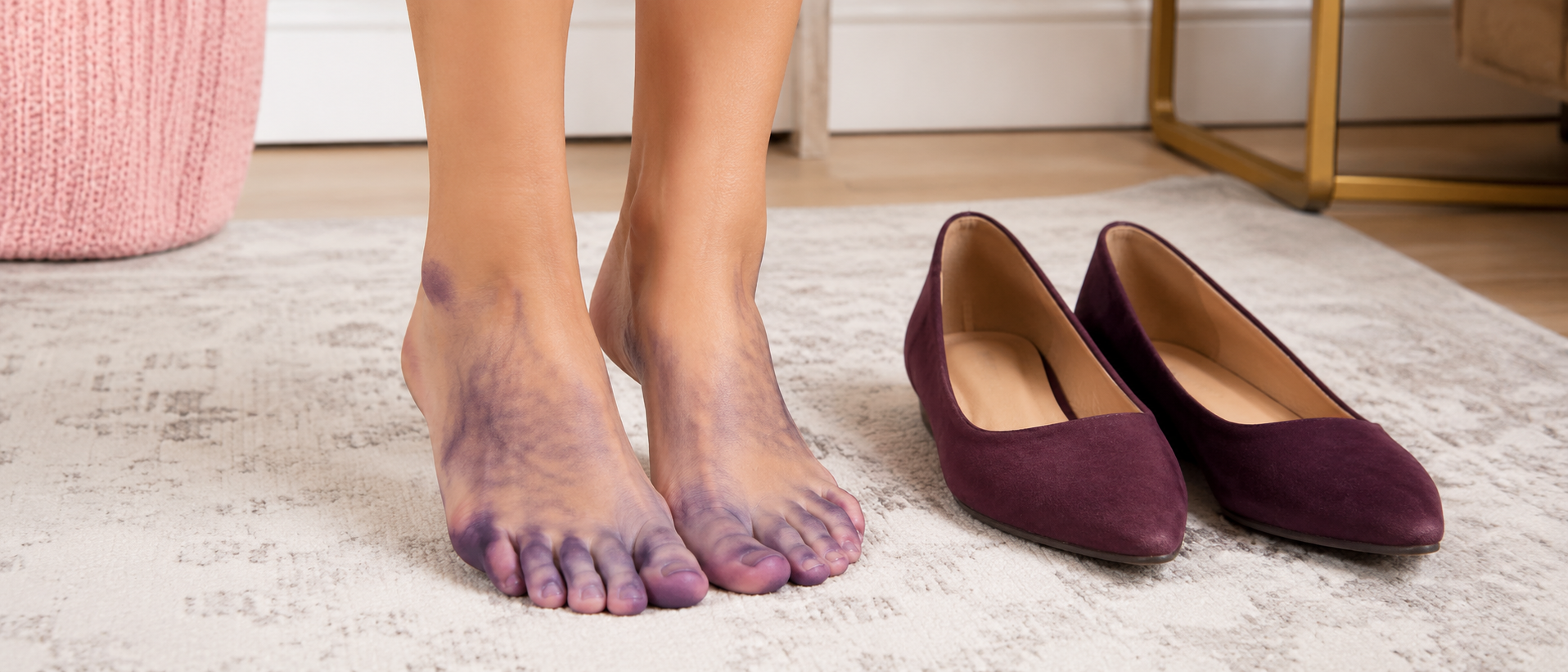
The most common reason is unstable dye inside the shoes. Sometimes the material is not fixed well, and when it comes into contact with skin, heat or moisture, the color starts to transfer to the feet, socks or tights.
This problem appears more often with dark shoes: black, brown, burgundy or navy. Still, light-colored shoes can also leave marks if they have a colored lining or a poor-quality insole.
This can happen with both expensive and more affordable shoes. That is why, when buying a pair, it is important to look not only at the outside, but also at the inside. Comfortable shoes should feel pleasant not only in appearance, but also during wear.
If you need women’s shoes for every day, choose models with neat lining, a soft insole and a quality inner finish. You can choose shoes, loafers or sneakers with a comfortable fit.
Reason 1. Poor-quality shoes
If shoes start staining your feet after a short walk, the reason may be poor material quality or a production issue. In this case, the dye is not fixed well and easily transfers to the skin.
If the pair is new and the problem is very noticeable, it is worth contacting the store. This is especially important if the stains are strong, appear after every wear and do not reduce even after care.
Before buying, you can do a simple test: gently rub the inside of the shoes with a white tissue. If a strong mark appears right away, the pair may stain your feet.
Reason 2. Moisture and rain
Shoes often start staining more strongly after rain. When the inside gets wet, the pigment becomes less stable and transfers more easily to socks or skin.
If you notice that the pair stains only in wet weather, it is better not to wear it in the rain. After getting wet, the shoes should be cleaned, dried at room temperature and treated with a special product.
For the rainy season, it is more practical to choose transitional shoes or models that handle moisture better.
Reason 3. Excessive sweating
In summer or during long walks, feet can sweat more. Moisture inside the shoes increases contact with the dye, so feet, socks and tights become stained faster.
In this case, it is important to care not only for the shoes, but also for the feet. After showering, dry your feet well, especially between the toes. Wear socks made from natural or breathable materials and do not wear the same pair of shoes every day without a break.
If the shoes are closed, you can use replacement insoles, talc or shoe deodorant. Useful products can be found in the women’s accessories category.
How to treat shoes so they stain less
The easiest solution is a special anti-color transfer spray. It can be called anti-color, stop color or dye fixer. The product is applied to the inside of the shoes, and then the pair must be left to dry completely.
Before using it, read the instructions carefully. Some products are suitable only for smooth leather, while others can be used on textiles or artificial materials.
If the shoes stain strongly, the treatment should be repeated regularly. Still, if the material is very poor quality, the spray may only reduce the problem, not remove it completely.
Can home methods be used?
Sometimes people recommend fixing the color with hairspray or wiping the inside with a weak vinegar solution. These methods can help, but they should be used carefully.
Hairspray can leave a sticky feeling, and vinegar can leave a smell or stains. That is why any method should first be tested on a small, less visible area. If the material changes color, becomes stiff or sticky, it is better to stop.
A safer option is to use special shoe products and replacement insoles. They are less likely to damage the pair.
How to protect your feet and socks
If the shoes stain only a little, but you still want to wear them, use dark socks, tights or foot covers. For closed shoes, you can add a thin insole that creates a barrier between the foot and the colored lining.
If you wear shoes directly on bare feet, such as ballet flats, loafers or sandals, you can use invisible socks or special inserts.
For the warm season, ballet flats, sandals and loafers with a soft inner finish are good choices. The main thing is that the material does not rub and does not leave marks on the skin.
How to remove dye from your feet
Start with a warm foot bath with soap for 15–20 minutes. After that, gently rub the skin with a soft washcloth or sponge. Do not press too hard, so you do not irritate the skin.
If the dye has gone deeper into the skin, you can use a gentle cleanser or foot scrub. Avoid aggressive products, especially if you have cracks, wounds or irritation.
After cleaning, apply a moisturizing cream so the skin does not become dry.
How to choose shoes that do not stain
When buying shoes, pay attention to the inside of the pair. The lining should be clean, without a strong smell and without dye marks on your fingers. Run a dry tissue along the inside, especially if the shoes are dark.
Try shoes on in the second half of the day and take a few steps. It is important to check not only the size, but also comfort: the pair should not press, rub or make the foot slide.
If you choose shoes for everyday wear, it is better to choose models with a quality insole and breathable inner finish. For active wear, sneakers or loafers and moccasins are practical options.
Tips
- Check the inside of the shoes with a white tissue before buying.
- Do not wear staining shoes in rain or wet weather.
- Use a spray against color transfer.
- Let shoes dry completely after wearing.
- Use replacement insoles as a protective layer.
- Wear breathable socks and take care of foot hygiene.
- Do not use aggressive home methods without testing them first.
- If the shoes stain very strongly, contact the store.
Conclusion
If shoes stain your feet, you do not need to throw away your favorite pair immediately. Sometimes the problem can be reduced with a special spray, replacement insoles, proper drying and regular care.
However, if the pigment transfers strongly to the skin after a short wear, this may indicate poor-quality material. In that case, it is better to contact the store and not tolerate discomfort.
Properly chosen women’s shoes should be beautiful, comfortable and safe for the skin. When you know how to choose shoes and how to care for them, your favorite pair lasts longer and does not bring unpleasant surprises.