






Why Your Feet Burn: Common Causes and How Footwear Affects Them
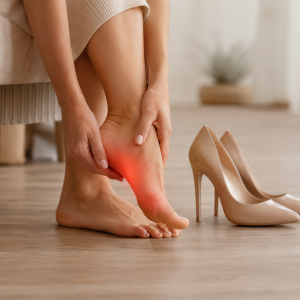
The feeling that your feet are burning, tingling or becoming too hot by the evening is familiar to many people. Sometimes the reason is simple: a long day on your feet, warm weather, active walking or uncomfortable footwear. But if the burning sensation repeats often and is accompanied by pain, numbness, swelling, itching or skin changes, it should not be explained only by fatigue.
The foot carries a heavy load every day, so any mistake in choosing footwear is felt quickly. A narrow last, rigid sole, high heel, synthetic materials or poor ventilation can increase discomfort. At the same time, footwear is not always the only cause: sometimes it simply makes an existing problem more noticeable.
Why a burning sensation appears in the feet
Burning feet are not a separate disease, but a symptom. It can appear because of overworked muscles and ligaments, poor circulation, irritation of nerve endings, inflammation of the plantar fascia, fungal infections or incorrect weight distribution. That is why it is important to notice not only the pain itself, but also when it appears: after walking, in the evening, at night, in the morning after sleep or immediately after putting on a specific pair.
If your feet “burn” only after wearing new shoes, the problem may be related to fit, materials or pressure in certain areas. But if the sensation appears regardless of footwear, becomes stronger at night or is accompanied by numbness, it is better not to postpone a consultation with a specialist.
Fatigue and overloading the feet
The most common everyday cause of burning feet is overloading. After long walks, standing work or an active day, muscles and ligaments get tired, the feet may swell, and the skin may feel hot. This happens especially often when footwear does not provide enough cushioning or support.
In such situations, it is important to choose pairs that match your daily rhythm. For long walks, comfortable sneakers, soft loafers, stable boots or models with a flexible but not too thin sole are more suitable. Footwear should not only look good, but also help the foot handle the load.
Flat feet and incorrect weight distribution
With flat feet, the arches of the foot work differently, so the load is distributed unevenly. Some areas become overloaded, while others receive too little support. As a result, by the evening there may be fatigue, heaviness, tingling, pain and a burning sensation.
In this case, the correct last, stability and arch support are especially important. A sole that is too flat, overly soft shapeless footwear or models that quickly lose their form can increase unpleasant sensations. Sometimes a doctor may recommend orthopedic insoles, but they should be selected individually.
Plantar fasciitis
Another common cause of burning and pain in the sole is plantar fasciitis. This condition is connected with irritation or inflammation of the dense ligament that runs along the bottom of the foot from the heel to the toes. Discomfort is often felt in the heel or arch area, and the pain may be sharp, pulling or burning.
With this problem, it is especially important not to overload the foot with shoes that have soles that are too thin. Rigid ballet flats without cushioning, old canvas shoes, uncomfortable flip-flops or overly flat models can increase tension in the plantar area. It is better to choose footwear with moderate support, a stable heel area and a comfortable fit.
Poor circulation and swelling
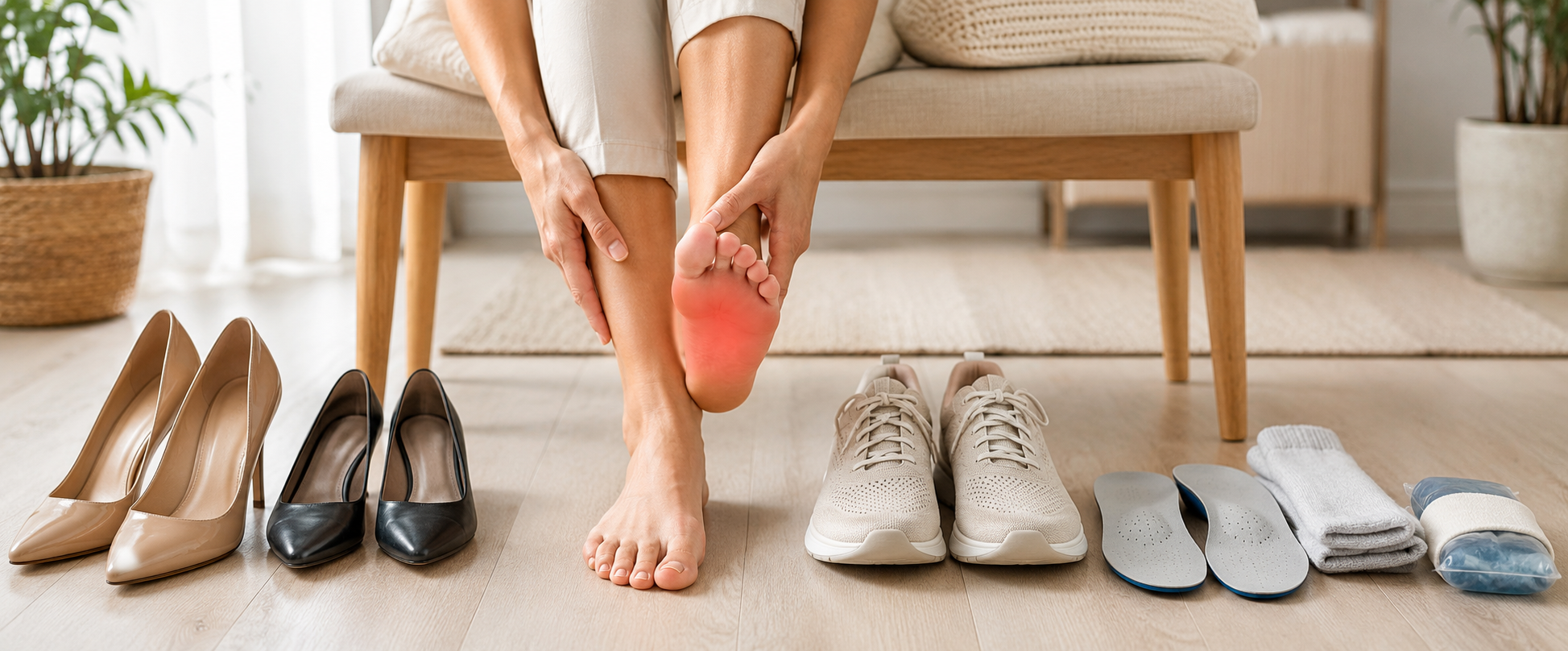
A burning sensation, pressure, heaviness and swelling may be connected with poor venous circulation. If your legs become heavy by the evening, your shoes start to feel tight, and marks from straps or socks remain on the skin, it is worth paying attention to the condition of your blood vessels and your daily load.
In this case, footwear should not squeeze the foot or ankle. Shoes that are too narrow, rigid straps, tight boots or high-heeled models can increase the feeling of pressure. For everyday wear, it is better to choose pairs with a comfortable width, a stable heel and soft inner materials.
Fungal infections and overheating
If the burning sensation is accompanied by itching, peeling, unpleasant odor, cracks between the toes or redness, one possible cause may be a fungal infection. The warm and humid environment inside footwear creates good conditions for fungi and bacteria to multiply, especially if the pair does not ventilate well.
To reduce the risk of discomfort, it is important to choose footwear made from materials that allow the skin to breathe, dry pairs regularly, change socks and take care of insoles. In the warm season, open sandals and light footwear are useful, but they should also be comfortable and should not rub the skin.
Neurological causes
Sometimes burning feet are not related to the skin or fatigue, but to irritation or damage of the nerves. In this case, a person may feel tingling, numbness, pins and needles, sharp sensations or burning pain. These symptoms should not be ignored, especially if they repeat regularly or appear in both feet.
In such situations, footwear should be as gentle as possible: without rigid pressure, rough seams or a toe box that is too narrow. The toes should not be squeezed, and the foot should not slide inside the shoe. For everyday outfits, comfortable loafers and moccasins, sneakers or soft transitional models are suitable.
How footwear can increase burning sensations
Even if footwear is not the main reason for discomfort, the wrong pair often makes symptoms stronger. A narrow toe box squeezes the toes, a rigid sole increases impact while walking, a high heel shifts body weight forward, and synthetic materials trap moisture and heat.
Size is especially important. Footwear should not be “almost comfortable”: if a pair already feels tight in the store, after several hours of wear the discomfort usually becomes stronger. For fall and winter, also consider the thickness of your socks so that transitional boots or high boots do not become too tight.
Which footwear is more comfortable
If your feet are prone to burning and fatigue, it is better to choose footwear with a stable sole, soft inner lining, enough space for the toes and good fixation. The pair should not move loosely on the foot, but it should not squeeze it either.
For everyday wear, models made of natural leather, suede or quality breathable materials work well. Removable insoles are an additional advantage: they are easier to dry, replace or adapt to individual needs. For special outfits, it is better to choose classic footwear with a stable heel rather than extremely high models.
When you should see a doctor
You should see a doctor if the burning sensation appears often, becomes stronger at night, is accompanied by numbness, severe pain, swelling, changes in skin color, cracks, wounds or symptoms only in one leg. A consultation should also not be postponed if a person has diabetes, vascular problems or reduced sensitivity in the feet.
It is important to remember: footwear can help with comfort, but it does not replace diagnosis. If the burning sensation is connected with nerves, blood vessels, inflammation or infection, simply changing shoes may not be enough. The role of good footwear is not to cure, but to avoid worsening the situation and help the feet feel more comfortable.
Advice from Happy Heels
If your feet often burn by the evening, start with simple things: check your shoe size, toe box width, heel height, condition of the insoles and lining material. Sometimes replacing a tight or poorly ventilated pair is enough to reduce discomfort.
Choose footwear according to your real day. For long walks — stable models; for the office — soft shoes without pressure; for the cold season — boots with a little space for socks. You can complete the outfit with light women’s accessories without sacrificing comfort for visual effect.
Quick summary
- Burning feet can be related to fatigue, overloading, flat feet, plantar fasciitis, fungal infections, blood vessels or nerves.
- Footwear is not always the cause, but it often increases unpleasant sensations.
- A narrow toe box, high heel, poor ventilation and rigid sole can provoke discomfort.
- For everyday wear, models with support, soft lining and enough space for the toes are more suitable.
- Removable insoles and breathable materials help take better care of both footwear and feet.
- If burning repeats often or is accompanied by worrying symptoms, a medical consultation is needed.
Conclusion
When your feet burn, it is important not to ignore the signal from your body. Sometimes the reason really is fatigue or uncomfortable footwear, but in other cases the burning sensation may indicate a condition that requires attention from a specialist. The best approach is to combine a reasonable choice of footwear, proper foot care and attention to symptoms.
Comfortable footwear should not squeeze, overheat, rub or force the foot to work in the wrong position. The better a pair matches the shape of your foot and your lifestyle, the lower the risk that by the evening you will feel burning, heaviness and the desire to take off your shoes as soon as possible.