








Hand-Stitched Footwear: What Are the Advantages Over Glued Construction?
When we choose shoes, we usually look first at their appearance: color, toe shape, heel height, material, and how well the pair fits into our wardrobe. But there is one detail that is not always visible at first glance, even though it strongly affects how long the shoes will last. This detail is the way the sole is attached.
In mass production, glued construction is used most often. It is a fast, convenient, and more affordable method that allows brands to produce a large number of models. But when it comes to durability, repairability, and the feeling of real quality, hand stitching remains one of the most valued construction methods.
Hand-stitched shoes feel different. They show attention to detail, a craft-based approach, and the desire to create a pair not just for one season, but for many years. This is why hand stitching is especially appreciated in classic, premium, and handmade footwear.
Why the method of attaching the sole matters so much
The sole carries most of the pressure every day: walking, bending, moisture, temperature changes, contact with asphalt, and the weight of the body. If the connection between the upper and the sole is weak, even a beautiful pair can quickly lose its shape and functionality.
In high-quality classic shoes, not only the leather or the last matters, but also the construction. It determines how the pair will behave after one month, one season, or several years of active wear.
What hand stitching means in footwear
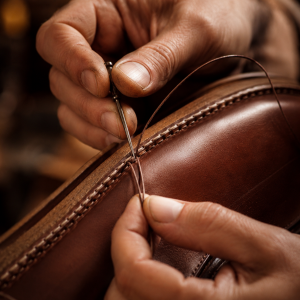
Hand stitching is a method of joining the sole to the upper with a strong thread. The craftsman makes the stitches carefully and consistently, controlling the tension of the thread, the depth of the puncture, and the straightness of the line. As a result, a mechanical connection is created — one that is supported not only by material, but also by structure.
This process requires time, experience, and precision. Unlike automatic assembly, a lot depends on the hands of the craftsman. Every stitch must be made correctly; otherwise, the shoes may lose symmetry, flexibility, or a neat appearance.
That is why hand stitching is often seen as a sign of a higher level of craftsmanship. It shows that the pair was made not only for a quick result, but also for strength and reliability.
How hand stitching differs from glued construction
Glued construction works differently. The sole is attached to the base of the shoe using a special adhesive. This method is faster, simpler, and cheaper, which is why it is widely used in everyday footwear from the mass market segment.
However, the strength of a glued connection depends on the quality of the adhesive, wearing conditions, and care. Moisture, heat, cold, improper storage, or frequent deformation can weaken the adhesive layer. Over time, the sole may start to come loose, especially around the toe or heel area.
Hand stitching creates a more stable connection. The thread physically joins the parts of the shoe, so the sole does not rely only on glue. Even with active wear, a stitched construction keeps its integrity for longer.
The main advantage: durability
The most important advantage of hand stitching is the lifespan of the shoes. Stitched footwear handles daily stress better because the joint works as part of the construction. It is not as sensitive to temperature changes and moisture as an adhesive layer.
For shoes that are worn often, this is especially important. For example, classic shoes, loafers, oxfords, or boots should not only look beautiful, but also keep their shape after many wears. If the sole starts to separate quickly, the entire pair loses its practical value.
Hand stitching helps shoes age beautifully. It does not make a pair eternal without care, but it gives it a much better chance of keeping its shape, stability, and neat appearance over time.
Repairability: why stitched shoes are easier to restore
Another important advantage is repairability. Stitched shoes can be restored: the sole can be replaced, the stitching can be reinforced, the lower layer can be renewed, or a damaged section can be repaired. This is especially valuable when the upper remains in good condition, but the sole has worn out.
With glued shoes, repair is often more complicated. Re-gluing may affect the appearance, geometry, and strength of the pair. Sometimes, after serious sole separation, the shoes can no longer be restored so that they look and feel the way they did before.
A stitched pair, on the other hand, can get a second life. This is why this method is valued by people who see shoes as a long-term purchase, not as something for only one season.
How stitching affects comfort
It may seem that hand stitching is only about strength, but it also affects how the shoes feel while walking. A properly made stitched construction preserves flexibility. The sole moves more naturally, and the shoes gradually adapt to the foot.
This is especially important for models that need to stay comfortable throughout the day: loafers and moccasins, classic shoes, transitional boots, and everyday closed footwear. If the sole is too rigid or poorly connected to the upper, the foot gets tired faster.
With hand stitching, the craftsman can control the shape of the pair more precisely. This helps create a cleaner fit, especially when the shoes are made from quality materials and built on a well-designed last.
The aesthetics of handmade work
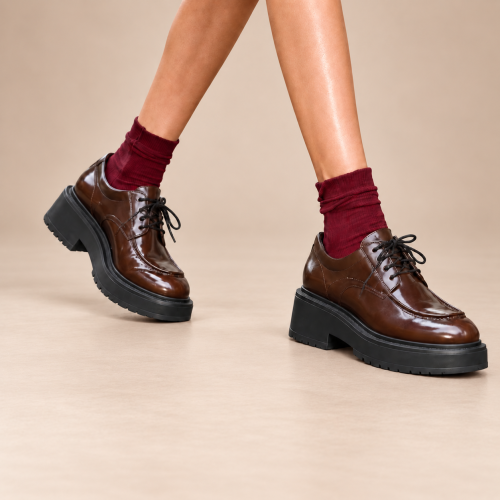
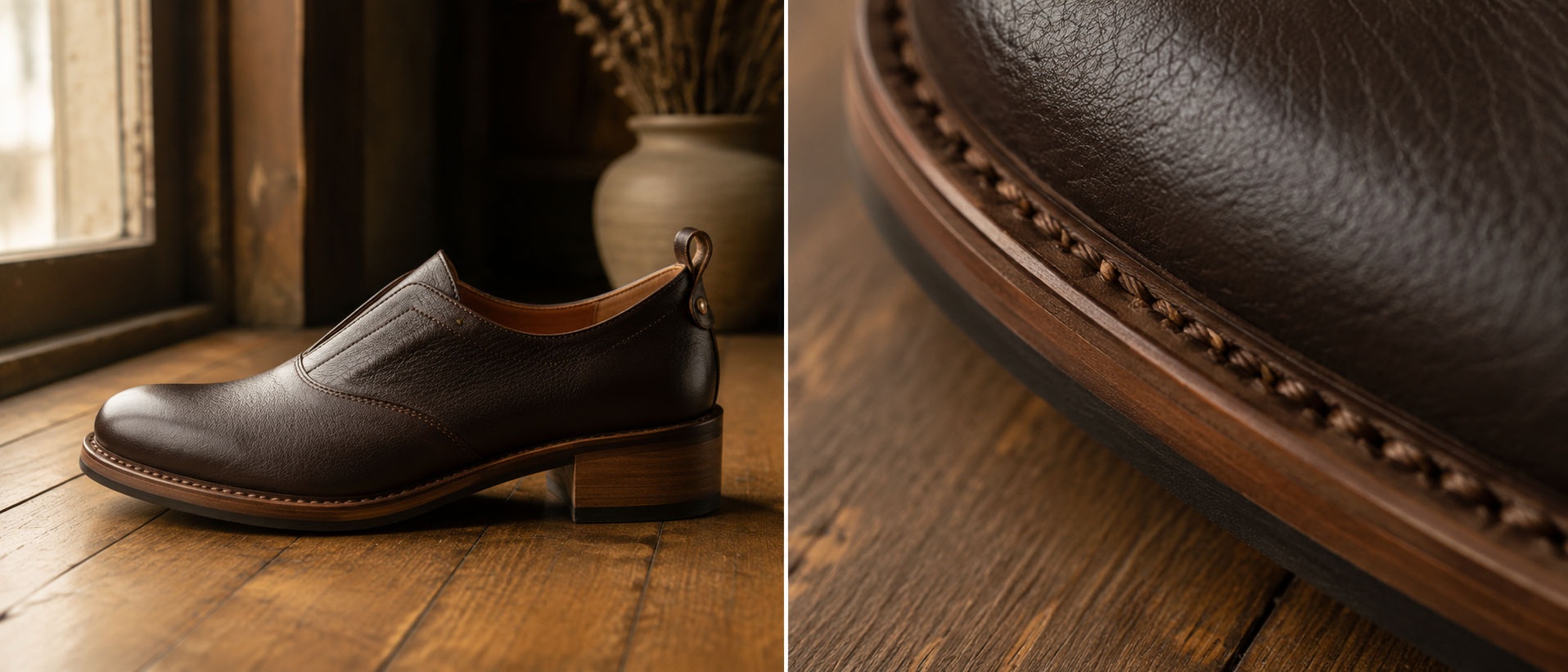
Hand stitching is not only about function, but also about visual character. A neat seam along the edge of the sole can become part of the design. It highlights the construction of the shoe, makes the pair more expressive, and shows that the product was made with attention to detail.
This finish looks especially beautiful on classic models: oxfords, loafers, boots, and elegant shoes. Stitching adds depth, a crafted character, and a feeling of reliability.
In glued shoes, the joining area is usually hidden. In stitched shoes, on the contrary, a high-quality seam can be shown openly. It becomes not a flaw, but proof of careful execution.
When glued construction is also appropriate
It is important to understand that glued construction does not always mean poor-quality shoes. For lightweight seasonal models, fashion pairs for one or two seasons, or shoes worn only occasionally, glued construction can be a normal solution.
For example, in some types of summer shoes, lightness, softness, and appearance may matter more than the possibility of long-term repair. But if you want a pair for frequent wear, durability, and stability, stitching becomes a serious advantage.
How to tell if shoes are truly stitched
Look at the edge of the sole. In stitched shoes, you can usually see a clean seam running along the outline. The stitches should look orderly, without rough distortions or loose threads. At the same time, small natural differences can be a sign of handmade work.
Also check the joint between the sole and the upper. If you see glue marks, a stiff shiny film, or uneven adhesive traces, the shoes may be glued. In quality stitched footwear, the connection looks tight, but not rough.
If you are buying shoes online, read the product description carefully. Serious manufacturers usually mention the method of sole attachment because hand stitching is considered an important advantage.
For which shoes hand stitching is especially valuable
Hand stitching is especially important for shoes you plan to wear for a long time: classic shoes, oxfords, loafers, transitional boots, and leather models. In these pairs, the quality of construction directly affects the lifespan.
For example, transitional boots often deal with moisture, cool weather, and active walking. That is why solid sole attachment is especially important.
Advice from Happy Heels
If you are choosing shoes for everyday wear, do not judge them only by appearance. Look at the sole, stitching, flexibility, fit, and quality of the connection between the parts. Sometimes these less visible elements decide whether a pair will become a favorite or disappoint quickly.
Hand stitching is a choice in favor of durability, repairability, and a more conscious approach to your wardrobe. Such shoes may cost more, but they often justify the price through longer wear and a stronger feeling of quality.
Quick summary
- Hand stitching connects the sole and upper with a strong thread.
- Glued construction is faster and cheaper, but depends more on wearing conditions.
- Stitched shoes usually last longer and are easier to repair.
- A quality seam can be both functional and decorative.
- For classic and everyday footwear, hand stitching is an important sign of reliability.
Conclusion
Hand stitching in footwear is not just a beautiful detail and not just a marketing term. It is a construction method that affects lifespan, comfort, repairability, and the appearance of the pair. Compared with glued construction, a stitched structure creates a stronger and more predictable connection.
If you want shoes that look good not only on the day of purchase, but also after months or years of wear, pay attention to how the sole is attached. Details like these help distinguish an ordinary pair from one truly made with care for quality.