






How to Choose Shoes for Wide Feet
Wide feet are not a flaw but a common feature. Some women have wide feet from childhood, while others develop them over time: after pregnancy, because of swelling, weight gain, age-related changes, or long hours spent on their feet. But often the problem is not the foot itself, but incorrectly chosen shoes.
Many women face the same situation: a beautiful pair looks perfect in a store or online, but after purchase it starts pressing on the sides, rubbing the toes, squeezing the bunion area, and causing tiredness. As a result, the shoes stay in the closet and become impossible to wear.
In this article, we will explain in simple words how to choose shoes for wide feet, what to pay attention to when buying, and which models are better suited for everyday comfort. After all, women’s shoes can be not only stylish but also comfortable.
Why Wide Feet Need Special Shoes
Wide feet need more space in the front part of the shoe. If the toe area is too narrow, the toes are squeezed, walking becomes uncomfortable, and calluses, corns, pain, and tiredness may appear.
It can be especially difficult to choose pumps, ballet flats, loafers, and closed summer shoes. A model may look soft and comfortable on the outside, but if it does not support the foot well or has a narrow toe, the foot will slide forward and press against the toes.
It is important to understand: comfortable shoes should not need to be broken in through pain. A good pair feels comfortable already during fitting. The material may adapt slightly to the foot, but it should not compensate for the wrong size or unsuitable shape.
Width and Fullness of the Foot Are Not the Same Thing
Before buying, it is important to understand what exactly you need: a wider front part, a high instep, or both.
A wide foot usually means that more space is needed in the toe and ball-of-foot area. Fullness, on the other hand, is connected with the volume of the foot: the instep, soft tissues, and swelling.
Sometimes the foot is wide, but the instep is not high. And sometimes it is the opposite: the foot is not very wide, but the shoe presses from above.
That is why, when choosing shoes, you should look not only at the insole length. Pay attention to the toe shape, depth of fit, and the presence of laces, straps, Velcro, and elastic inserts. These details help adjust the shoes to the features of the foot.
How to Measure Your Foot Correctly
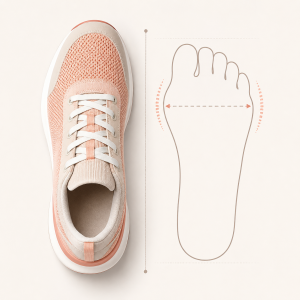
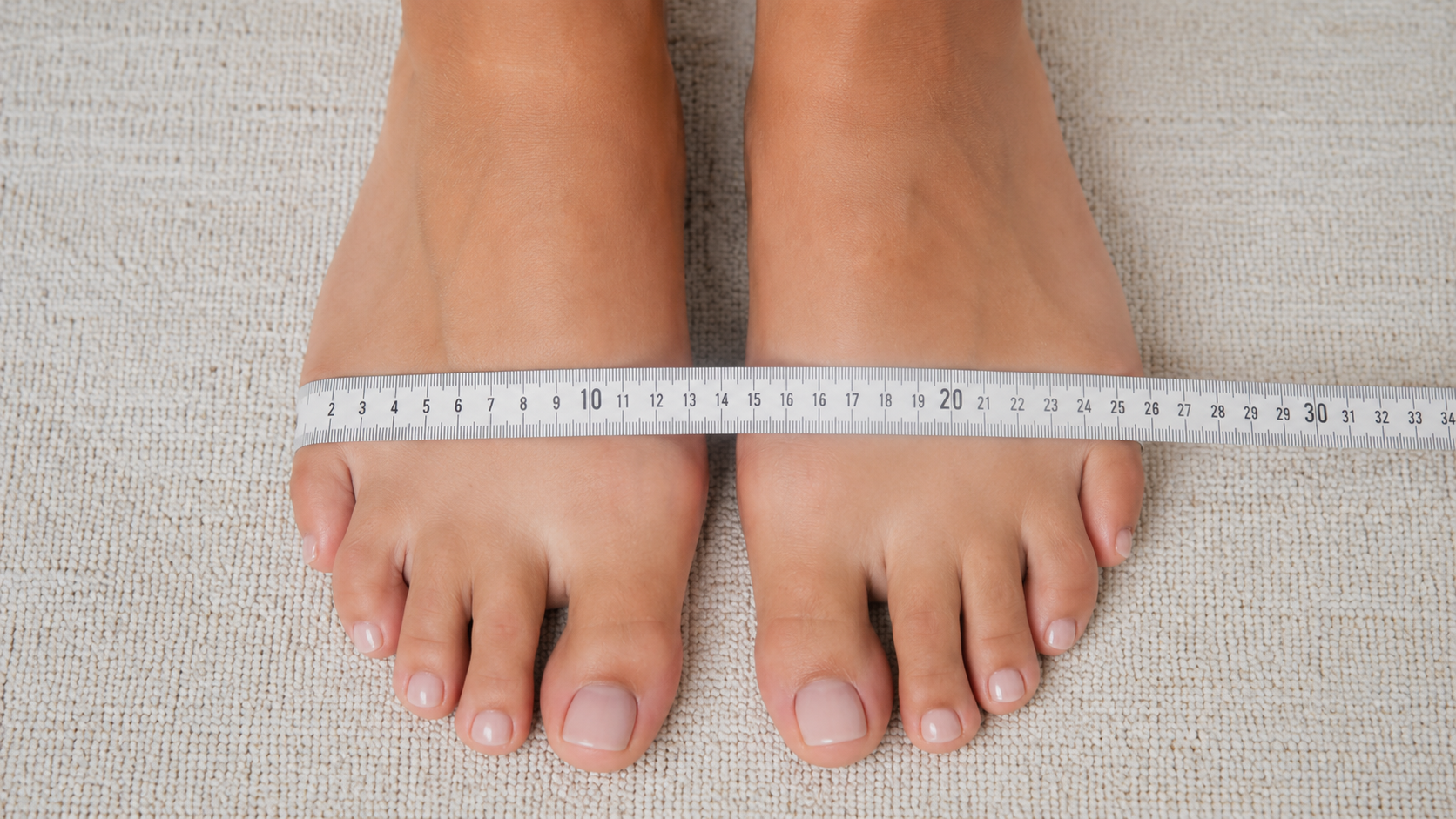
To avoid choosing the wrong size, measure your foot at home. This is especially important when buying shoes online.
Place your foot on a sheet of paper and trace around it with a pencil. It is better to do this while standing, because under body weight the foot becomes slightly wider. Then measure the length from the heel to the longest toe and the width at the widest part of the foot.
Measure both feet. Very often, one foot is slightly larger than the other. In this case, use the larger foot as your guide.
If you are choosing summer shoes, measure your bare foot. If you are buying ankle boots or winter boots for the cold season, measure your foot while wearing the socks you plan to wear with the shoes.
It is better to take measurements closer to the evening, when the feet may become slightly larger after daily activity. This way, you will choose a size that will be comfortable not only in the morning but also after an active day.
What Shoes Are Suitable for Wide Feet
For wide feet, it is better to choose models that give the toes enough freedom and support the foot well. The ideal option is shoes with a soft front part, a stable sole, and adjustable elements.
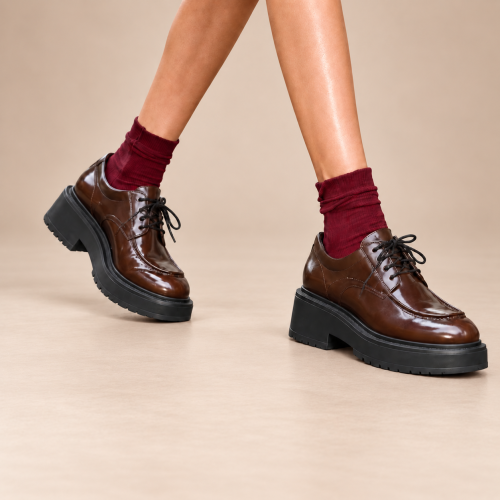
Good choices include lace-up sneakers, lace-up ankle boots, sandals with adjustable straps, shoes with a wider toe box, and models made of soft leather or suede. Such everyday shoes do not squeeze the foot and allow you to move comfortably.
Laces, Velcro, and straps are especially useful if your feet sometimes swell. In the morning, the shoes can be fastened more tightly, and in the evening they can be loosened a little. This simple solution helps avoid pressure and discomfort.
It is also worth paying attention to models with an anatomical insole. It supports the foot, reduces pressure while walking, and makes the shoes more comfortable.
What Materials Are Better to Choose
Material is very important. For wide feet, soft and flexible materials are better because they can adapt slightly to the shape of the foot.
Good choices include natural leather, soft eco-leather, suede, nubuck, and quality textile. They should not be too stiff or rough. Thin soft leather is often more comfortable because it takes the shape of the foot faster and rubs less.
Patent leather, stiff synthetic materials, and thick rough inserts can be uncomfortable. They adapt poorly to the foot and often press exactly in the areas where the foot needs more freedom.
If you are choosing shoes online, read the material description and reviews carefully. Customers often mention whether the model is suitable for wide feet or, on the contrary, runs small and narrow.
What Toe Shape to Choose
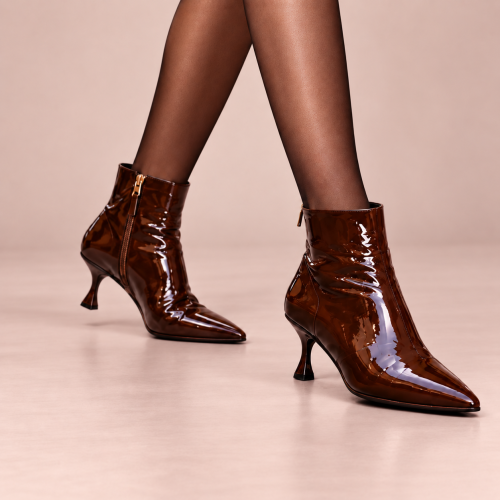
For wide feet, it is better to avoid narrow and pointed toes. This shape squeezes the toes and can quickly cause pain. This is especially true for heeled shoes, ankle boots, and closed ballet flats.
More comfortable options are rounded, square, or softly tapered toes. They leave more space for the toes and look modern. A square toe is now often found in women’s shoes and is suitable for those who want to combine style and comfort.
If you like elegant models, choose shoes with a visually elongated shape but with enough width inside. It is important that the toes do not press against the shoe or lie on top of each other.
Heel and Sole: What Is More Comfortable
Wide feet need stability. That is why, for everyday wear, it is better to choose shoes with a small platform, a stable heel, or a flat but not too thin sole.
A very thin sole can increase pressure on the foot, especially if you walk a lot. A high stiletto is also not the best option: the foot slides forward, the toes are squeezed, and the pressure increases.
If you want a heel, choose a wide and stable one. It looks feminine while giving more support. For everyday shoes, a medium-height heel or a soft cushioned sole is usually the most comfortable option.
Which Models Are Better Not to Buy
Some models may be beautiful but are often uncomfortable for wide feet. Be careful when choosing:
- shoes with a narrow pointed toe;
- stiff ballet flats;
- loafers without adjustment if they press on the sides;
- slip-ons in which the foot slides forward;
- shoes made of stiff patent leather;
- models with thin straps that cut into the skin;
- high stiletto heels;
- closed shoes without enough space in the front;
- shoes that are too soft and do not support the heel.
This does not mean that all these models are forbidden. But they need to be tried on especially carefully. If the shoes press, rub, or force your toes to squeeze together right away, it is better to choose another pair.
How to Choose Summer Shoes for Wide Feet
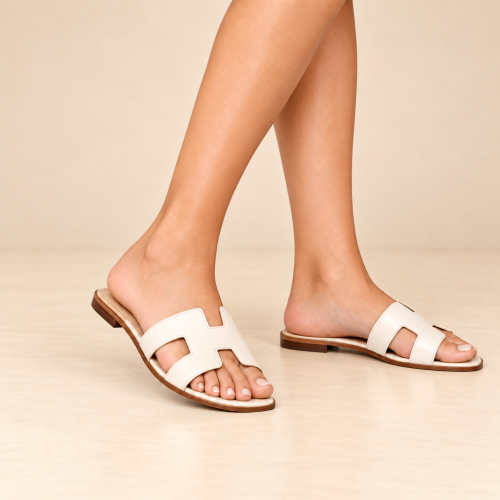
In summer, feet swell more often, so shoes should be soft and adjustable. Sandals with straps, sandals with a stable sole, and clogs with a wide front part are good options.
Avoid thin straps in the toe area if they cut into the skin. It is better to choose wider bands or soft bridges. They look neat and do not create painful pressure.
If the shoes are open, make sure the toes do not extend beyond the edge of the sole. The foot should fit completely on the base.
How to Choose Winter Shoes
Winter shoes for wide feet should be warm, stable, and not tight. It is important to leave space for socks and a small air gap. If boots or ankle boots fit too tightly, the feet may get cold faster.
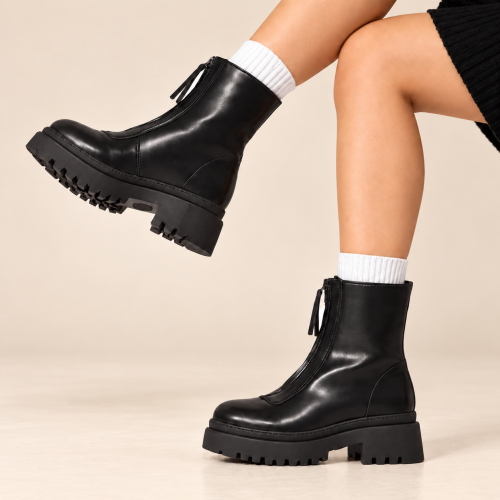
Choose models with laces, zippers, and elastic inserts. They help the shoes fit the foot better. The sole should be stable and not too slippery.
If you have a high instep, check the height and volume in the upper part of the foot in advance. Sometimes the length is right, but the boot does not zip up or presses from above — such a pair is better to avoid.
Tips: How to Choose Shoes for Wide Feet
- Measure not only the length but also the width of your foot.
- Use the larger foot as your guide if your feet are different sizes.
- Choose shoes with a rounded or square toe.
- Avoid models that are too narrow or pointed.
- Do not buy tight shoes hoping they will stretch.
- Pay attention to soft materials.
- Choose laces, Velcro, and adjustable straps.
- For everyday wear, choose a stable sole.
- Do not buy shoes if they press on the sides right away.
- Read reviews about the fit and fullness of the model when buying online.
- For summer, choose soft straps that do not cut into the skin.
- For winter, leave space for socks.
- If your feet swell, choose models with adjustable volume.
- If you have a bunion, avoid stiff seams in the problem area.
- For long walks, choose an anatomical insole and cushioning.
What to Do If Shoes Are Slightly Loose
Sometimes a woman with wide feet chooses a larger size so the shoes do not press on the sides. But then the pair may become too loose in length. In this case, insoles, half insoles, soft inserts, or heel grips can help.
However, it is important not to try to fix a model that is too unsuitable. If the shoes are too large, the foot slides, the heel slips out, and the toes still get tired, it is better to choose another pair.
Comfort should feel natural, not be created only with a large number of additional inserts.
When It Is Better to Consult a Specialist
If you have a pronounced bunion, constant swelling, foot pain, corns, or strong discomfort while walking, it is better to consult a specialist. Sometimes regular wide shoes are not enough, and custom insoles or models with special width are needed.
This is especially important if you walk a lot or work on your feet. The right shoes help not only the feet but also posture, knees, back, and overall well-being.
Conclusion
Wide feet are not a reason to give up beautiful shoes. Today, you can find stylish models that do not squeeze the foot, provide good support, and look feminine.
The main thing is to know how to choose shoes correctly: pay attention to the width, toe shape, material, sole, and the possibility of adjustment.
You should not tolerate pain for the sake of fashion. Beautiful women’s shoes should help you feel confident, not make it difficult to walk. Choose comfortable shoes according to the features of your feet, and then every pair will bring you not only a beautiful look but also everyday comfort.