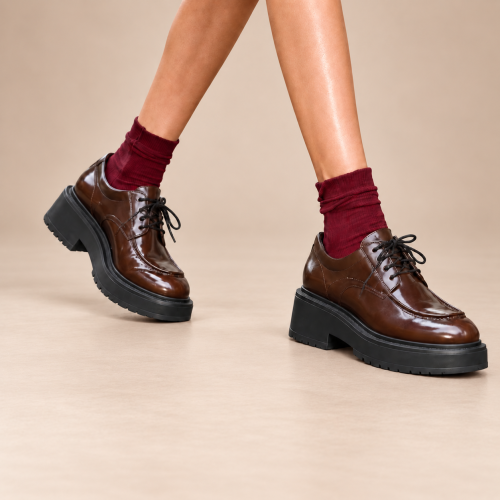
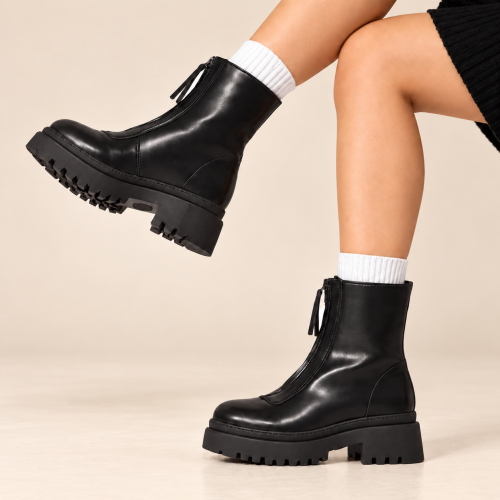
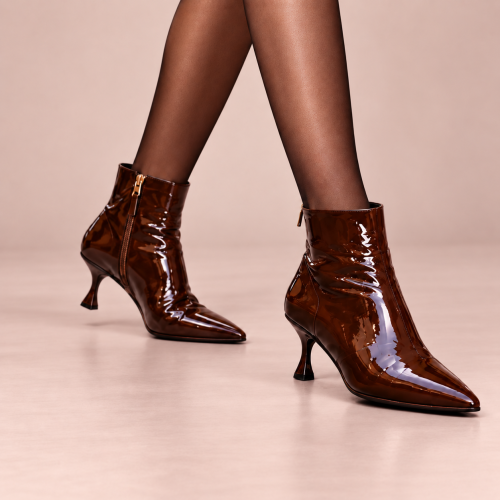








Leather Shoe Care: Simple Steps for Long-Lasting Wear
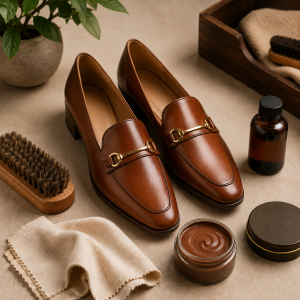
Leather shoes are not just a beautiful detail of your wardrobe. A good pair can last for several seasons, keep its shape, look neat, and stay comfortable. But this is possible only if the shoes are cared for properly.
Many women face the same problem: their favorite shoes, boots, or knee-high boots quickly lose their beautiful appearance. The leather becomes dull, creases appear, there are stains, small cracks, unpleasant odor, or marks from moisture. Sometimes it seems that the shoes have worn out too quickly, although in reality they simply needed regular care.
In this article, we will explain how to care for leather shoes with simple steps so they stay beautiful and comfortable for longer. Because quality women's shoes are not a purchase for one day, but a part of your style and confidence.
Why leather shoes need care
Natural leather is strong, beautiful, and pleasant to wear. It adapts well to the shape of the foot, looks elegant, and works with many outfits. However, leather is still a natural material that reacts to moisture, dirt, sun, temperature changes, and improper storage.
If you do not clean your shoes after wearing them outside, dirt gradually settles into the surface. If you dry them on a radiator, the leather can become too dry and crack. If you store them without shape holders, the pair can lose its silhouette.
Proper care helps preserve not only the appearance, but also the comfort. After all, comfortable shoes should fit well, not lose their shape, and not become stiff after just a few wears.
Step 1. Choose the right shoes from the start
Shoe care begins even before the purchase. If the pair is chosen incorrectly, it will lose its shape faster and will be harder to wear. That is why it is important to know how to choose shoes by size, width, and fit.
Leather shoes should not feel too tight. Yes, natural leather can adapt slightly to the shape of the foot, but this does not mean you should buy a tight pair. If the toes touch the front and the sides squeeze the foot, the shoes will stretch unevenly and quickly lose their neat appearance.
If you choose high heel shoes, pay attention to the fit, heel height, and how soft the inner part feels. For everyday wear, it is better to choose models that are comfortable not only for a few minutes, but for several hours.
Step 2. Clean shoes after wearing
The simplest care rule is not to leave dirt on leather for too long. After going outside, wipe the shoes with a soft dry or slightly damp cloth. This is especially important after rain, dust, mud, or contact with street substances.
For smooth leather, use a soft cloth or a gentle sponge. Do not rub the surface with a hard brush, as it may leave scratches. If the dirt is strong, use a special leather cleaner suitable for the color and type of material.
Before applying cream or protective products, the shoes must be clean. If you apply care products over dust, the surface may look uneven and dull.
Step 3. Dry leather shoes correctly
Leather shoes should not be dried on a radiator, near a heater, with a hair dryer, or under direct sunlight. Strong heat dries out the leather, making it stiff, less elastic, and more likely to crack.
If the shoes get wet, first remove the dirt, then place dry paper or napkins inside. They will absorb excess moisture and help keep the shape. Replace the paper as it becomes damp.
It is best to dry shoes at room temperature in a well-ventilated place. It takes longer than drying them on a radiator, but it is much safer for the material.
Step 4. Use leather shoe cream
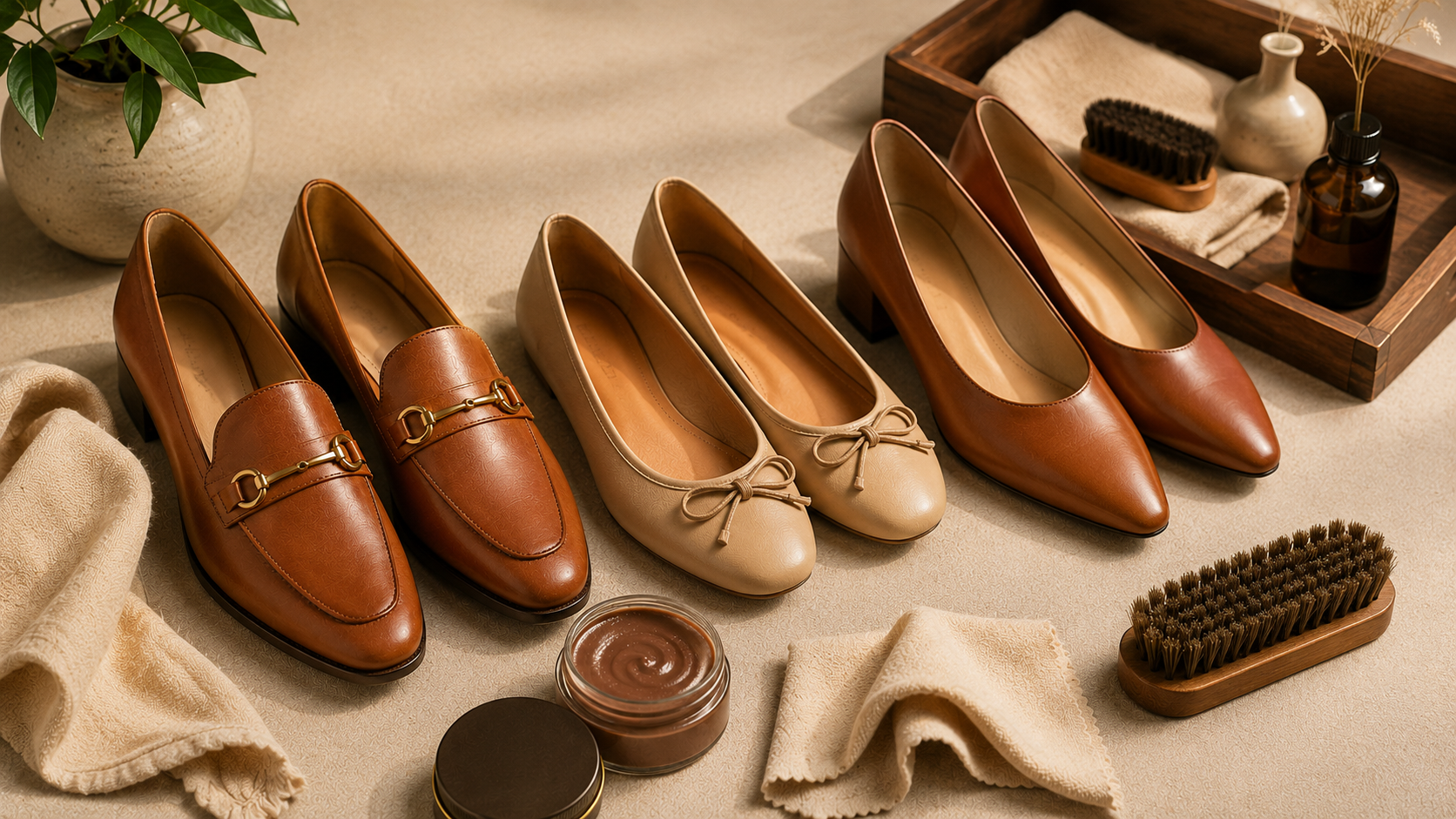
Shoe cream helps leather stay soft, elastic, and beautiful. It nourishes the material, refreshes the color, and can hide small signs of wear. It is especially important to use cream for shoes that you wear often.
Choose the cream according to the color of the pair. For universal care, you can use a colorless cream, but for dark or colored shoes, it is better to choose a product in a matching shade.
Apply the cream in a thin layer on a clean and dry surface. Then let it absorb and polish the shoes with a soft cloth. Do not apply too much cream: excess product can leave greasy marks and attract dust.
Step 5. Protect shoes from moisture
Moisture is one of the main enemies of leather shoes. Even quality leather can suffer from repeated exposure to water if it is not protected. That is why before going outside, especially in rainy weather, it is useful to apply a water-repellent spray.
The spray creates a protective layer that helps repel water and dirt. It does not make the shoes completely waterproof, but it reduces the risk of stains and damage.
It is especially important to protect transitional shoes, because in spring and autumn they often come into contact with rain, mud, and moisture.
Step 6. Use insoles for comfort
Insoles help make shoes more comfortable, reduce pressure on the foot, and keep the inside of the pair in better condition. They are especially useful if you wear the same pair often or walk a lot during the day.
For closed models, you can choose soft insoles that improve the fit and make each step more comfortable. They can also help absorb moisture and reduce the risk of unpleasant odor.
It is important to air out the insoles regularly and replace them when needed. Even high-quality shoes lose freshness faster if the inside is not cared for.
Step 7. Put on and take off shoes carefully
Many types of damage appear not because of poor quality, but because of wrong habits. For example, if you constantly press down the back part of the shoe or boot with your foot, it quickly deforms and no longer supports the heel properly.
Use a shoehorn, especially for closed shoes, boots, and knee-high boots. This simple habit helps keep the shape of the back part and extends the life of the pair.
Also, do not take off shoes by pressing one foot against the other. It is better to open the zipper, loosen the laces or straps, and remove the pair carefully by hand.
Step 8. Store shoes correctly
Storage strongly affects the appearance of leather shoes. If pairs are simply thrown on top of each other in the closet, the leather can crease, scratch, and lose shape.
It is best to store shoes in boxes, fabric bags, or on separate shelves. You can place paper, special inserts, or shape holders inside. This is especially important for boots and knee-high boots.
If you have leather knee-high boots, store them so the shaft does not fold. You can use special holders or thick paper for support.
Step 9. Alternate your pairs
Even the best leather shoes need rest. If you wear the same pair every day, the leather does not have time to dry and return to its shape. Because of this, creases, odor, and wear appear faster.
It is better to have several pairs for the season and alternate them. For example, for work — shoes or loafers, for walks — sneakers or boots, for rainy weather — a more practical pair.
If you need everyday shoes, choose models that are easy to alternate. This will extend the life of each pair and help you create different outfits.
Step 10. Repair small damage on time
Small scratches, scuffs, and worn heel tips are better repaired on time. If you postpone repair, the damage can become more visible and harder to fix.
Small marks on smooth leather can be covered with cream or wax in a matching color. If the sole has started to come off, the heel is worn down, or the leather is seriously damaged, it is better to visit a shoe repair shop.
Timely care and repair help keep shoes beautiful for much longer.
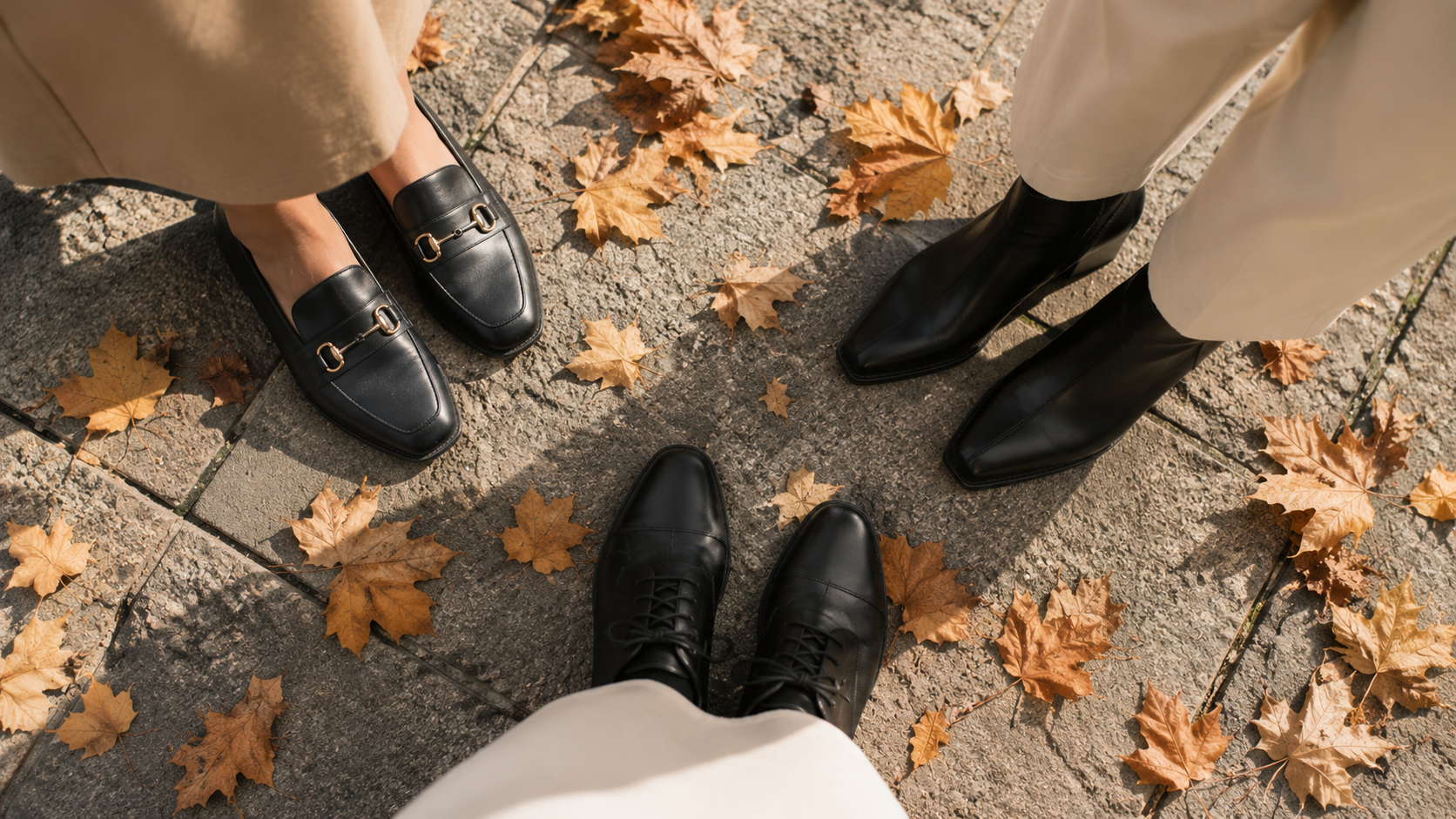
What products you need for care
For basic leather shoe care, you do not need many products. A small set is enough to help you clean, nourish, and protect your pairs quickly.
- soft cloth for cleaning;
- brush for removing dust;
- leather cream in a suitable color;
- colorless cream for universal care;
- water-repellent spray;
- soft cloth for polishing;
- shoehorn;
- shape holders or paper for storage.
You can also use shoe accessories that help preserve shape, protect leather, and increase comfort while wearing.
List of tips: how to extend the life of leather shoes
- Clean shoes after each wear, especially after rain and mud.
- Do not dry leather shoes on a radiator or with a hair dryer.
- Use leather cream so the material stays soft.
- Before rainy weather, apply a protective spray.
- Store shoes in a dry and ventilated place.
- Use shape holders so the pair does not deform.
- Put on closed shoes with a shoehorn.
- Do not wear the same pair every day.
- Repair small damage immediately.
- Choose insoles for comfort and freshness.
- Do not buy shoes that are too tight — they will deform faster.
- Choose quality women's shoes that suit your foot.
Common mistakes in leather shoe care
The first mistake is drying shoes near a radiator. It seems like a quick solution, but strong heat dries out the leather and can make it crack.
The second mistake is applying cream to a dirty surface. First, the shoes need to be cleaned and dried, and only then should care products be applied.
The third mistake is storing shoes without preserving their shape. If a pair stays empty for a long time, the leather can crease, especially around the toe area and the shaft of boots.
Another mistake is forgetting moisture protection. Even expensive leather shoes need a water-repellent product if you wear them in changeable weather.
Conclusion
Leather shoe care does not require complicated actions. It is enough to clean the pair regularly, dry it correctly, use cream, protect it from moisture, and store it in proper conditions.
If you care for shoes from the first days, they keep their shape, color, softness, and neat appearance for longer. This helps save money and allows you to wear your favorite pairs more often with pleasure.
When you know how to choose shoes and how to care for them properly, shopping becomes more conscious. Quality comfortable shoes can serve you for a long time, while properly chosen everyday shoes will give you comfort, style, and an easy walk every season.