







More Than Just Indoor Footwear: Everything You Need to Know About Choosing the Right Slippers
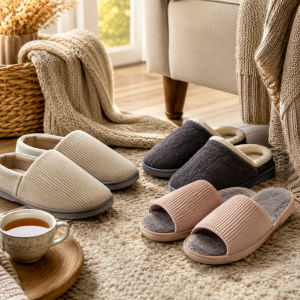
Home slippers are often seen as a small detail: something soft, comfortable and familiar that we put on as soon as we come home. But in reality, they are not just footwear “for the apartment”. The right pair can affect foot comfort, the feeling of relaxation after a long day and the way we move around the house.
We carefully choose sneakers for walks, shoes for the office and boots for the cold season, but home slippers are often bought spontaneously: we like the color, the soft material or the cute design. Still, at home, our feet also need support, especially if the floors are hard: tile, laminate, parquet or stone.
The right slippers help the feet rest, protect them from cold floors, reduce impact while walking and make everyday home routines more comfortable. That is why they should be chosen not only by appearance, but also by shape, sole, material and fit.
Why home slippers matter more than they seem
After a whole day in outdoor shoes, the feet need relaxation. But walking barefoot on a hard floor does not always provide real rest. Home surfaces are usually flat and firm, so the foot does not receive the natural cushioning it would get when walking on soil, grass or sand.
If you often walk barefoot on cold tiles or laminate, the heel and arch of the foot may get tired faster. This is especially noticeable in the evening: you are already at home, but your legs still feel tense. Good slippers create a soft barrier between the foot and the floor and help distribute weight more comfortably.
What happens to your feet at home
At home, we may not walk as much as outside, but we take many small steps: kitchen, bathroom, bedroom, balcony, cleaning, cooking and evening routines. If slippers are too flat, slippery or do not stay well on the foot, walking becomes less natural.
For example, in slippers that are too loose, the toes constantly try to hold the footwear in place. The muscles become tense, the step becomes stiffer and the feeling of rest disappears. The same happens when the sole is too thin and the foot feels every impact with the hard floor.
The anatomy of proper home slippers
Good slippers should be not only attractive, but also well designed. The sole is very important: it should not be too thin, completely flat or overly rigid. It is better when it has slight thickness, soft cushioning and a small lift in the heel area.
The inner part also matters. The insole should feel pleasant against the skin, should not slip and should not create overheating. Light arch support helps the foot stay in a more natural position, especially if you spend a lot of time at home.
The toe shape should leave enough room for the toes. If the toes hit the front, feel squeezed or bend unnaturally, the slippers will not provide real comfort. Home footwear should relax the foot, not force it to adapt to an uncomfortable shape.
Why walking barefoot is not always beneficial
Walking barefoot can feel pleasant when the surface is soft and warm. But modern homes often have hard floors. On tile, parquet or laminate, the foot receives repeated impact, especially if you move around the house a lot.
In addition, the floor may be cold, which creates extra discomfort. That is why slippers are useful not only for coziness, but also for protection. This is especially important in winter, during transitional seasons and in homes where the floor does not retain heat well.
Which materials to choose for different seasons
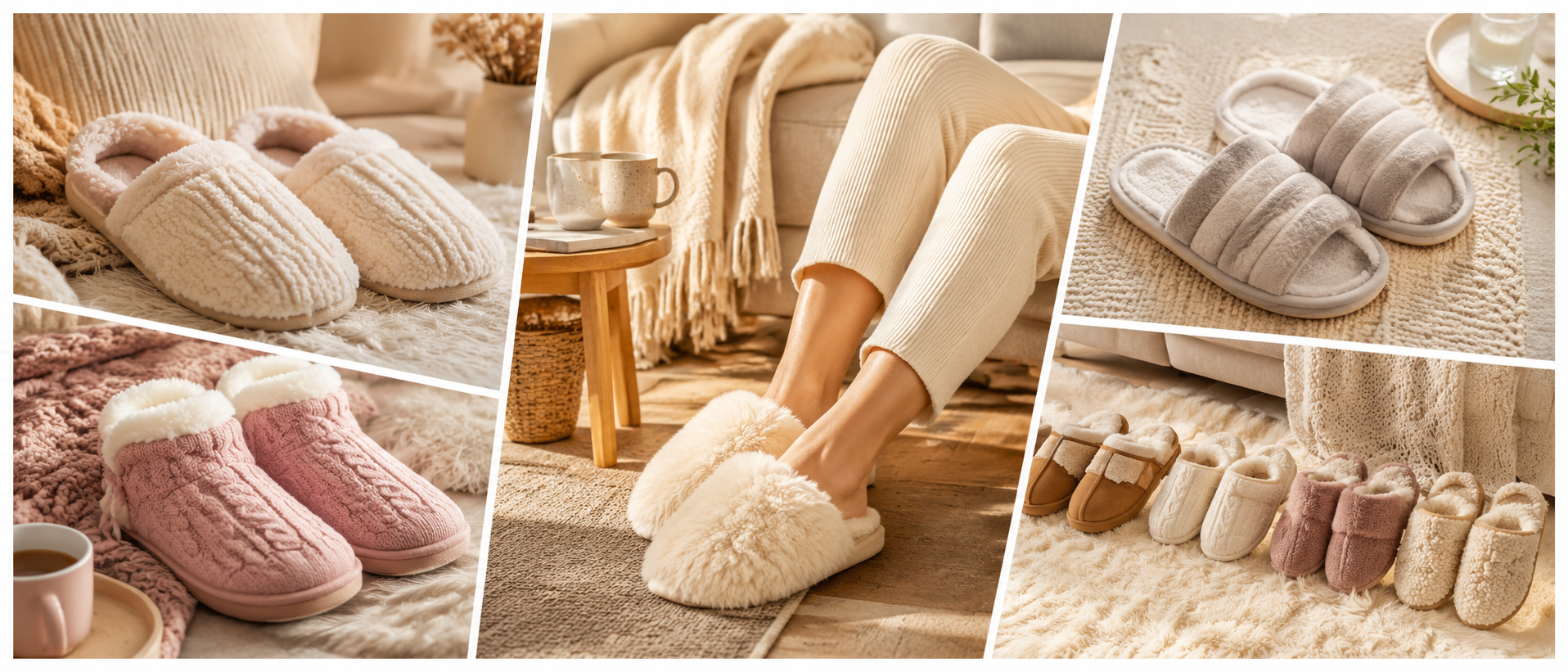
For the cold season, slippers made of felt, wool, dense textiles or soft warm materials are a good choice. They keep warmth, create a cozy feeling and are ideal for evenings spent at home.
For the warm season, lighter materials are better: cotton, breathable textiles or more open models. Feet need not only warmth, but also air. If slippers are too warm, the foot sweats, and unpleasant odor may appear faster inside.
For the bathroom, shower area or balcony, it is useful to have a separate pair made of material that is easy to wash and resistant to moisture. However, such slippers are not always suitable for wearing all day, especially if the material does not allow the skin to breathe.
Home slippers and style: can beauty and comfort be combined?
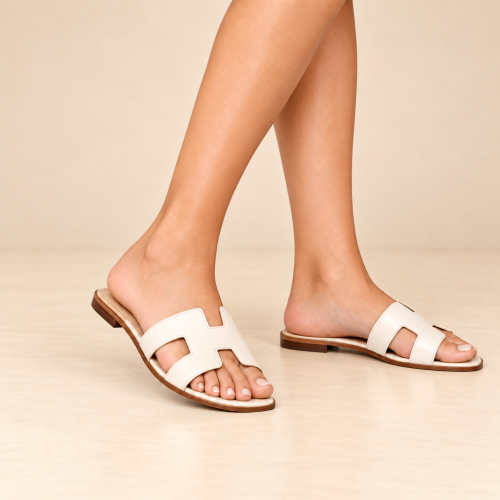
Modern slippers are no longer limited to simple soft models. They can be minimalistic, cozy, elegant, colorful or similar in style to a relaxed home version of flip-flops. But appearance should not be the only criterion.
A stylist’s opinion is simple: home footwear also influences how we feel. When you wear neat, clean and beautiful slippers at home, you feel more put together and comfortable. But if a pair looks good yet constantly slips off or causes discomfort, the joy disappears quickly.
The ideal option is balance: first a good fit, a safe sole and a pleasant material, then color, decoration and style.
Mistakes when choosing home slippers
The first mistake is choosing a pair only because it feels soft. Slippers that are too soft and shapeless may provide no support at all. They may feel nice while sitting on the sofa, but not always while walking around the house.
The second mistake is choosing a size that is too large. It may seem that home footwear can be looser, but if slippers fall off the foot, the muscles stay tense all the time. The pair should feel relaxed, but secure.
The third mistake is wearing the same pair for years. Home footwear also wears out: the insole flattens, the sole becomes worn, and the material absorbs odors. If slippers have lost their shape, it is time to replace them.
How to know if slippers fit you well
Good slippers do not need to be adjusted at every step. They do not slip, squeeze, rub or force the toes to hold the sole. While walking, you feel softness, but you do not sink completely into the material.
Pay attention to the sole as well. It should be stable, should not slide on the floor and should bend slightly in the front part. If you have stairs, tiles or glossy laminate at home, a non-slip surface is especially important.
How to care for home slippers
Home slippers also need care. They should be aired regularly, cleaned from dust and checked around the insole. Textile models can be cleaned according to the manufacturer’s instructions, while delicate materials should be treated more carefully.
It is not recommended to wear slippers immediately after a shower if your feet are still wet. Moisture gets into the insole faster and may lead to odor. For the bathroom, it is better to have a separate washable pair.
When it is better to have several pairs
One pair of slippers does not always solve every situation. For the cold season, you can choose a warm closed model; for summer, a light open one; and for the bathroom, a moisture-resistant pair. This way, each pair lasts longer and is easier to maintain.
If you work from home and spend most of the day in slippers, it is especially important to choose a pair with a good fit and comfortable sole. In this case, home footwear becomes almost as important as summer shoes or transitional pairs for outdoor wear.
Advice from Happy Heels
Choose home slippers as part of self-care. This is not a random small purchase, but an item you wear every day. It should help you relax, not create extra tension.
Before buying, evaluate three things: how they fit, what the sole is like and what material they are made from. If the slippers stay well on the foot, do not slip and suit the season, they truly become part of home comfort.
Quick summary
- Home slippers are important not only for coziness, but also for foot protection.
- A sole that is too flat and thin does not provide enough cushioning.
- Slippers should stay well on the foot and not squeeze the toes.
- The material should be chosen according to the season and home conditions.
- Home footwear also needs regular cleaning and timely replacement.
Conclusion
The right home slippers are a small detail that affects everyday comfort. They help the feet relax after effort, protect them from cold and hard floors, and make every step at home softer and more pleasant.
Choose slippers not only by how they look, but also by how they feel on the foot. When home footwear is comfortable, safe and pleasant to the skin, the home truly becomes a place of rest, warmth and calm.