







Shoe Myths That Stop You from Choosing a Comfortable Pair

There are many shoe tips that sound convincing, but in practice they often make it harder to choose the right pair. Some women believe that good shoes must always be expensive. Others tolerate pain, thinking that new shoes will “stretch out.” And some choose only high heels because they think this is the most feminine option.
In reality, comfortable shoes are not a myth and not rare luck. You can find them if you look not only at the price, brand, and appearance, but also at the fit, material, sole, heel, and your lifestyle. This is especially important if you need shoes for everyday wear.
Let’s look at the main myths that prevent women from choosing women’s shoes correctly and see how to choose shoes without pain, disappointment, and unnecessary purchases.
Why shoe myths affect comfort
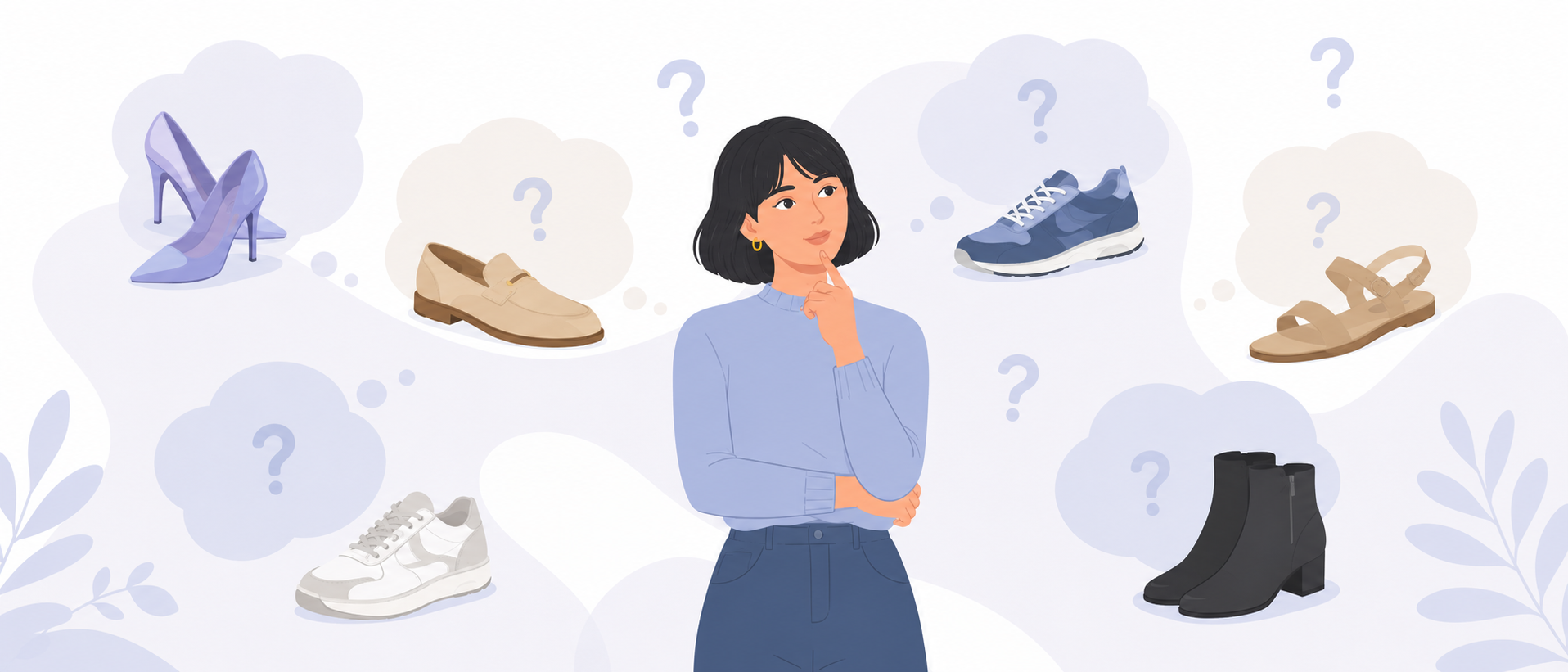
Many women buy shoes according to old rules: “leather is always better,” “the heel must be high,” “my size never changes,” or “if it rubs, it will stretch later.” But the foot can change, different models can fit differently, and a beautiful pair is not always comfortable.
The main mistake is choosing shoes only with your eyes. If a pair presses, slips, rubs, or keeps the foot tense, it will not become your favorite, even if it looks perfect.
For a basic wardrobe, it is important to choose models that suit your lifestyle: classic shoes, sneakers, ballet flats, loafers, or boots should be not only stylish, but also comfortable.
Myth 1. Expensive shoes are always better than cheaper ones
The price can say something about materials, design, or brand, but it does not guarantee a perfect fit. An expensive pair can also rub, press, or simply not suit the shape of your foot.
At the same time, more affordable shoes can be comfortable if they have a soft insole, a good sole, the right size, and a neat inner finish. That is why it is important to judge not only the price, but also how the shoes feel during fitting.
Myth 2. The higher the heel, the more feminine the look
A high heel can look impressive, but femininity does not depend only on height. A low stable heel, neat pumps, ballet flats, or sandals can also look elegant.
If you spend a lot of time on your feet, a high heel can quickly become a problem. For daily wear, it is better to choose a height that lets you walk freely, stand comfortably, and not think about pain.
For elegant and everyday outfits, you can choose high-heeled shoes, while for every day it is better to have a more stable pair.
Myth 3. Shoe size never changes
This is one of the most common myths. Size can change because of age, pregnancy, swelling, weight changes, foot width, or the features of a specific model. Also, size charts can differ from one brand to another.
Do not buy a pair only because the box shows “your” size. During fitting, check whether the toes are not squeezed, whether the heel does not slip out, and whether it is comfortable to take a few steps.
Myth 4. Sneakers are only for sport
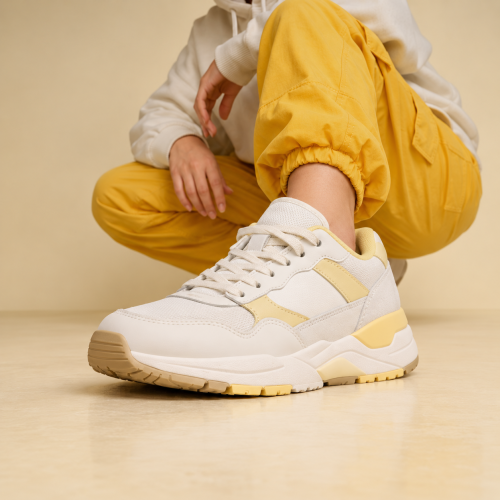
Today, sneakers have long become part of the everyday wardrobe. They are worn with jeans, dresses, suits, skirts, and summer outfits. They are practical shoes for everyday wear, especially if you walk a lot.
The main thing is to choose the right model for your needs. For workouts, you need sports support, while for the city you can choose light and stylish sneakers with a comfortable sole.
Myth 5. A flat sole is always healthier than a heel
A completely flat sole does not always mean comfort. If it is too thin and gives no cushioning, the foot can get tired faster, and each step can feel harder.
This does not mean you should give up shoes without heels. Just choose models with a soft insole, a flexible but not too thin sole, and a good fit. For example, comfortable ballet flats can be a good choice for the warm season.
Myth 6. New shoes must be tolerated until they stretch
A small adjustment period is possible, especially with leather shoes. But strong pain, pressure, and rubbing are bad signs. If a pair already feels uncomfortable during fitting, it may remain uncomfortable.
Shoes should not squeeze the toes, press on the bunion area, or rub the heel from the first minutes. It is better to choose another model right away than to try to save a failed purchase later with plasters.
Myth 7. Synthetic materials always cause foot odor
In the past, synthetic materials often did not allow enough airflow, but modern materials can be much better. Odor appears not only because of the material, but also because of moisture, lack of care, the wrong size, and wearing the same pair every day.
To keep shoes fresh for longer, let them air out, use insoles, clean the inside, and do not wear the same pair every day without a break.
Useful products for care and comfort can be found in the women’s accessories section.
Myth 8. Turkish shoes are always better than Chinese shoes
Many people still believe that Turkish shoes are better in quality than Chinese shoes. But today, this is no longer completely true. Modern Chinese shoes can look neat, fit comfortably on the foot, and be suitable for everyday wear.
Factories in China have changed a lot: many manufacturers use good materials, comfortable lasts, soft insoles, and modern technologies. As a result, women’s shoes can be not only beautiful, but also practical.
Turkish shoes can also be good, but they are not always more comfortable or higher quality. Everything depends on the specific model, factory, sole, stitching, material smell, and fit on the foot. That is why, when choosing shoes, it is better to look not only at the country of production, but also at comfort, appearance, and how the shoes feel when tried on.
Myth 9. Shoe care is needed only for appearance
Shoe care is not only about beauty. It extends the life of the pair, protects the material from moisture, and helps preserve the shape. This is especially important for suede, nubuck, light leather, and shoes for everyday wear.
If you clean shoes after wearing, dry them correctly, and store them with filling or shoe forms inside, they will look neater and last longer.
Tips: how to choose a comfortable pair
- Do not choose shoes only by price or brand.
- Try the pair on and take a few steps.
- Check that the toes have enough space.
- Do not buy shoes that press strongly from the beginning.
- For every day, choose a stable sole.
- Keep high heels for shorter outings.
- Consider the season, material, and your lifestyle.
- Start caring for shoes from the first days of wear.
Conclusion
Shoe myths often stop you from choosing a truly comfortable pair. Expensive shoes are not always perfect, high heels are not always better, and size can change depending on the model and the shape of the foot.
Properly chosen women’s shoes should suit you by fit, material, season, and lifestyle. When you know how to choose shoes without unnecessary stereotypes, the purchase becomes more successful.
The main rule is simple: a beautiful pair should also be comfortable. Then the shoes will not just stand in the closet, but will make you happy every day.