





Shoes for Rainy Weather: How to Choose a Practical Pair
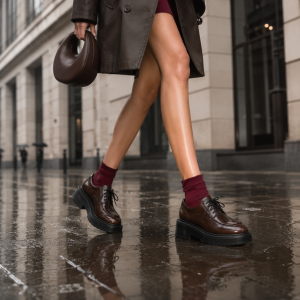
Rainy weather often becomes a real challenge for shoes. In the morning, you can leave home wearing beautiful ankle boots, and just an hour later face puddles, wet asphalt, mud and slippery tiles. As a result, your feet get wet, the shoes lose their shape, your mood is spoiled, and your favorite pair may no longer look as neat.
Many women want to look stylish even in bad weather, but at the same time they do not want to feel cold, slip or worry about every drop of rain. That is why it is important to understand in advance how to choose shoes for rain, so that they are not only beautiful, but also practical.
Properly chosen women's shoes for rainy weather help you feel confident throughout the day. They protect against moisture, support the foot well, do not slip and are easy to combine with everyday clothes. In this article, we will explain what to pay attention to when buying and which models are best for rain.
Why regular shoes are not always suitable for rain
Not every pair can handle damp weather. Even if shoes look thick and reliable, water can get inside through the seams, zipper, thin sole or the place where the upper part connects to the sole. Suede, textile, thin untreated leather and shoes with decorative perforation suffer especially quickly.
The problem is not only wet feet. Moisture can damage the material, leave stains, cause unpleasant odor and deformation. If shoes stay wet for a long time, they lose their shape faster and fit worse on the foot.
That is why rainy weather requires a separate practical pair. It can be comfortable shoes for every day that match your style and also protect against moisture.
What materials are better to choose
For rain, the best materials are those that are not afraid of moisture or are well protected with special treatment. This can be genuine leather with water-repellent treatment, quality eco-leather, PVC, rubber or modern membrane materials.
Leather shoes can be a good option for rainy weather if the leather is dense, treated with a protective spray and has reliable seams. But it is important to remember: genuine leather does not like constant soaking, so it needs regular care.
Suede and nubuck are better worn only in dry weather or light dampness, if the material has been treated with a special protective spray. In heavy rain, such shoes can quickly lose their appearance.
Rubber boots, PVC Chelsea boots and waterproof ankle boots are the most practical choice for heavy rain and puddles. Modern models look much neater than before, so they can easily fit into an urban outfit.
The sole: the main safety element
In the rain, it is important not only to keep your feet dry, but also not to slip. That is why the sole should be dense enough, stable and textured. A smooth thin sole can slip on wet tiles, asphalt or inside a shopping center.
A good option is shoes with a treaded sole. It helps provide better grip and makes each step more confident. This is especially important if you walk a lot or use public transport.
For rainy weather, it is better to choose a medium-thick or high sole. It slightly lifts the foot above the wet surface and helps protect the shoes from getting wet from below.
Boots with a chunky sole
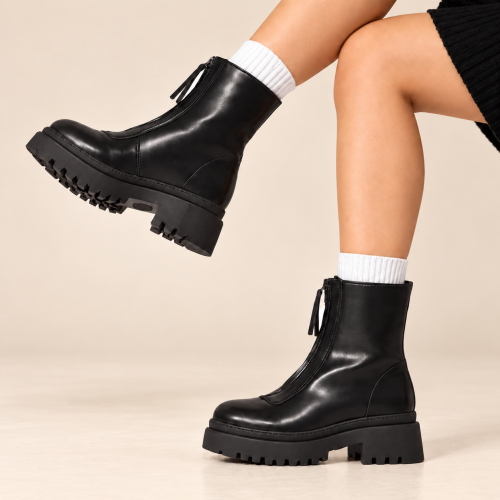
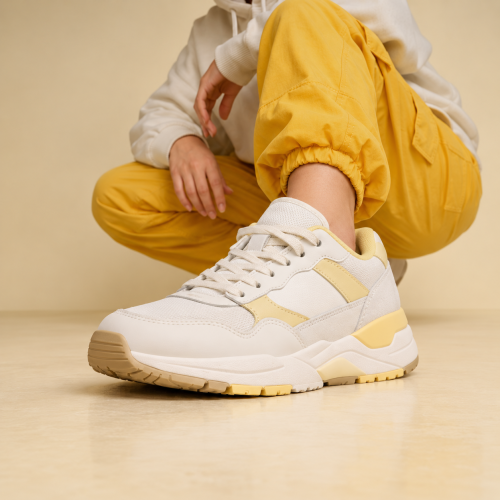
Boots with a chunky sole are one of the most practical options for rain. They look modern, go well with jeans, trousers, dresses and coats, and the high sole protects against wet ground and puddles.
Such everyday shoes are especially comfortable for autumn and early spring. They are suitable for walks, work, studies and city errands. The main thing is to choose models without unnecessary openings and with a tight connection between the upper part and the sole.
If the boots are made of leather or eco-leather, be sure to use a water-repellent spray. This will help preserve their appearance and extend the life of the pair.
Chelsea boots for rainy weather
Chelsea boots are a comfortable and stylish model that works well for damp weather. They have no laces, are easy to put on, and the elastic inserts help the shoes fit well on the foot.
For rain, it is better to choose Chelsea boots with a higher sole or models made from water-resistant materials. PVC or dense leather options are especially practical. They look minimal and match different outfits: jeans, dresses, skirts, trench coats or classic coats.
Chelsea boots are great because they do not look too sporty, but still remain comfortable. They are a good option for women who want to keep an elegant look even in bad weather.
Loafers with a high sole
Platform loafers can be a stylish solution for moderate rain. They look good with business suits, trousers, skirts and dresses. The high sole helps protect the foot from wet asphalt.
However, it is important to choose loafers made of smooth leather or eco-leather. Suede models are better saved for dry weather. Also pay attention to the seams and inner fit: if there are large gaps, moisture can quickly get inside.
Loafers are not suitable for deep puddles, but for the city and light rain they are a good option if you want to look neat and feminine.
Rubber boots and waterproof models
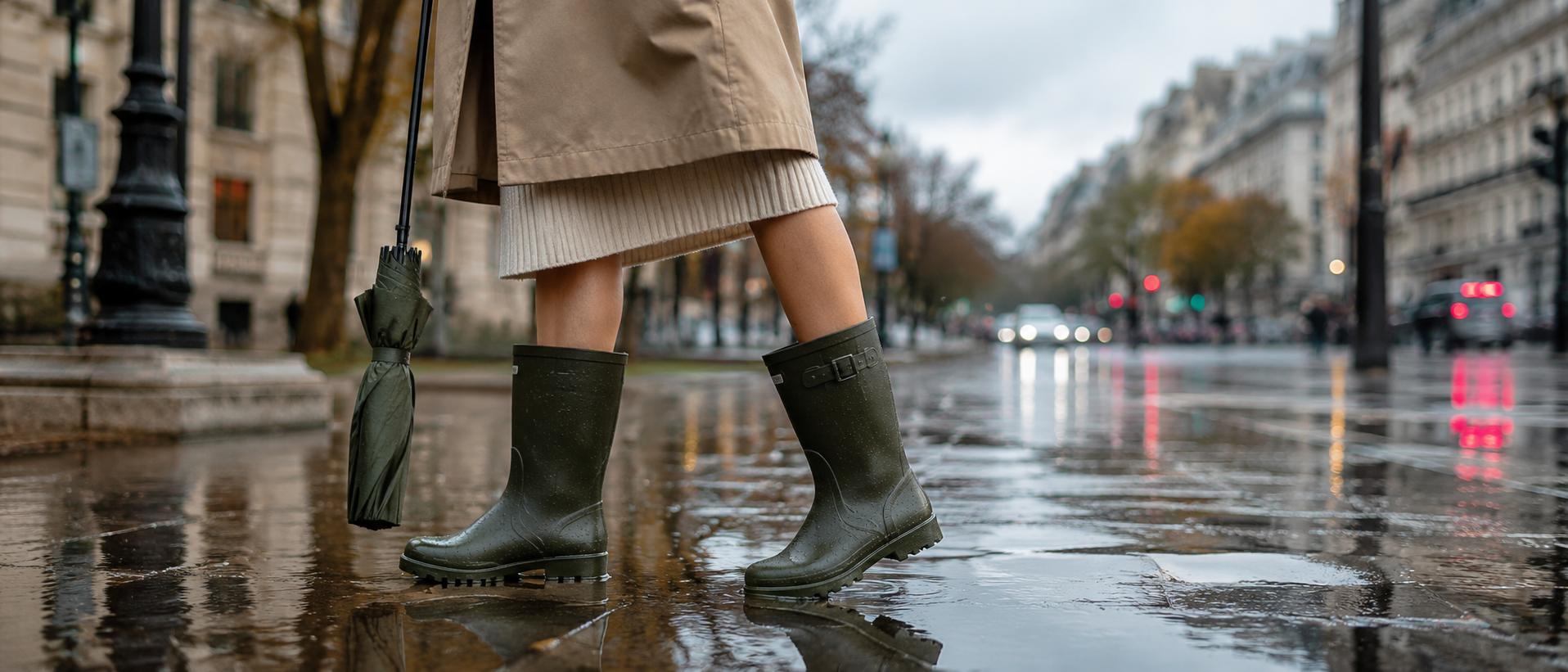
If it is raining heavily outside, with puddles and mud, rubber boots or special waterproof models will protect best. Today, such shoes can look stylish: there are short boots, PVC Chelsea boots, tall models, chunky tread soles and even neat city styles.
The main advantage of such shoes is reliable protection against moisture. But for long wear, it is worth choosing models with a comfortable insole and a soft inner part. If the boots are too stiff, they can rub and tire the feet.
For cool weather, you can choose boots with a warm insert or wear them with thicker socks. Just make sure the shoes are not too tight.
Ankle boots with a stable heel
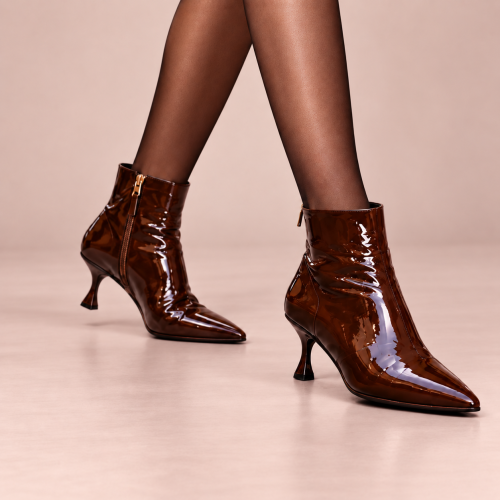
If you prefer feminine outfits, pay attention to ankle boots with a stable heel. They can be practical for rainy weather if they are made of a smooth material and have a non-slip sole.
It is better to choose models with a closed upper, secure fit and no decorative holes. The heel should be stable, not too thin and not too high. A stiletto heel in the rain is not the safest option, especially on wet tiles.
Ankle boots go well with dresses, trousers, midi skirts, coats and trench coats. They are a good choice for the office, meetings and city outfits.
Low shoes and derbies
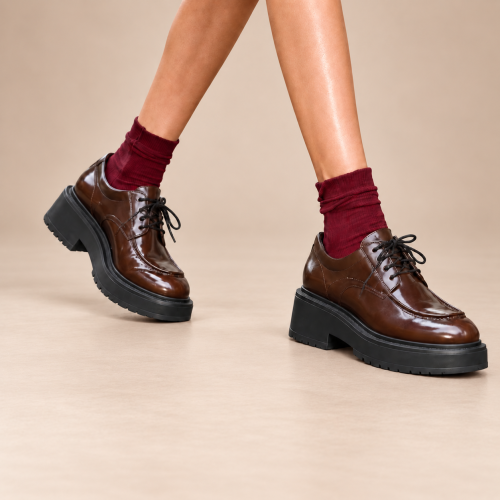
Leather low shoes or derbies are suitable for rain if they have a dense sole, quality seams and no perforation. They look neat, slightly formal and work well for everyday and business outfits.
Such shoes can be worn with trousers, jeans, skirts and dresses. For damp weather, it is better to choose models with a textured sole. A smooth sole can slip, especially when it is wet outside.
Before going out, it is recommended to treat the shoes with a protective product. This is especially important for leather models that you wear often.
What shoes are better to avoid in the rain
In rainy weather, it is better not to wear shoes made of thin suede, light-colored textile, satin and other delicate materials. They quickly absorb moisture, get dirty and can lose their shape.
Shoes with thin smooth soles are also not the best choice. They do not protect against wet surfaces and can be slippery. Open shoes, sandals, ballet flats with thin soles and shoes with decorative holes are also better saved for dry weather.
If you really love a certain pair, but it is not suitable for rain, it is better not to risk it. Sometimes one outing in heavy bad weather can damage shoes for a long time.
How to choose the right size for rainy weather shoes
Shoes for rain should not be tight. In cool weather, you may wear thicker socks, and by evening your feet may swell slightly. That is why it is important to have a little free space inside.
But shoes that are too large are also uncomfortable. The foot will slide, there will be a risk of rubbing, and walking will feel less stable. A good fit means that the toes have enough space, the heel does not slip out, and the foot is well supported.
If you buy shoes online, be sure to check the insole length, material description, sole height and reviews. This will help you understand how suitable the model is for rainy weather.
How to care for shoes after rain
Even the most practical shoes need care. After rain, do not put the pair straight into the closet. First, remove dirt with a soft damp cloth, then let the shoes dry at room temperature.
Do not place shoes on a radiator or near a heater. Strong heat can dry out leather, make it crack or deform. It is better to put paper inside to absorb excess moisture and leave the pair in a well-ventilated place.
After drying, leather shoes can be treated with cream or a protective spray. Rubber shoes only need to be washed, dried and stored away from direct sunlight.
List of tips: how to choose shoes for rain
- Choose materials that are not afraid of moisture: treated leather, eco-leather, rubber, PVC or membrane materials.
- Pay attention to the sole: it should be textured and non-slip.
- For heavy rain, choose waterproof boots or Chelsea boots.
- For the city, chunky-sole boots, platform loafers or leather derbies are suitable.
- Avoid suede and light-colored textiles in heavy rain.
- Check the seams and the place where the sole connects to the upper part.
- Do not choose shoes that are too tight, especially for cold weather.
- Choose a stable heel instead of a stiletto.
- Use a water-repellent spray for leather shoes.
- After rain, always dry shoes naturally.
- Do not store damp shoes in a closed closet.
- For everyday wear, it is better to have a separate pair for bad weather.
Common mistakes when choosing shoes for rain
The first mistake is focusing only on appearance. A beautiful pair may be completely unsuitable for rain if it has a thin sole, open seams or material that quickly absorbs water.
The second mistake is wearing the same shoes in any weather. Even a high-quality pair will deteriorate faster if you constantly wear it in the rain. It is better to have a separate practical model for damp weather.
The third mistake is drying shoes on a radiator. It seems like a quick solution, but in reality it damages the material and shape. Proper drying takes more time, but keeps shoes beautiful for longer.
Another mistake is forgetting protective products. A water-repellent spray does not make every shoe completely waterproof, but it helps the material better withstand moisture and dirt.
How to keep your style in rainy weather
Practical rain shoes do not have to be rough or boring. Today you can choose stylish Chelsea boots, minimal ankle boots, neat rubber boots, leather derbies or ankle boots with a stable heel.
To make the outfit look balanced, match the shoes with your outerwear. Black boots look good with coats and leather jackets. Brown and beige models go well with trench coats, warm jackets and soft knitwear. Rubber boots can be combined with a raincoat, jeans and an oversized sweater.
If the shoes are quite simple, add an accent with a bag, scarf or outerwear. This way, the outfit will be practical, but not boring.
Conclusion
Shoes for rainy weather should protect against moisture, not slip, fit comfortably on the foot and match your wardrobe. The best options for rain are boots with textured soles, Chelsea boots, waterproof boots, leather derbies, platform loafers and ankle boots with a stable heel.
It is important to remember that comfortable shoes start with the right choice. Look at the material, sole, seams, fit and care. Then even a rainy day will not ruin your plans.
When you know how to choose shoes for bad weather, shopping becomes easier. Practical women's shoes can be stylish, modern and comfortable. And properly chosen everyday shoes will help you feel confident even when it is raining outside, with puddles and slush.